English ![]()

No. 7, Tianyang 6th Road, Dongfang Community, Songgang Street, Bao'an District, Shenzhen, Guangdong, China(518100)
Views: 137 Author: Site Editor Publish Time: 2026-08-28 Origin: Site
Milling is a fundamental subtractive manufacturing process that shapes parts by cutting away material using a rotating tool. Unlike 3D printing, which builds up layers, milling carves off excess material from a workpiece. You control two primary movements: the tool's spin and the part's movement, which together deliver highly precise results. For example, car engine blocks and medical implants require exact dimensions that only milling can achieve. Modern CNC milling machines can hold tolerances within ±1 to ±10 µm, far tighter than conventional manufacturing methods. The global CNC milling machine market reached USD 84.86 billion in 2025, underscoring its critical role in industry.
When you need CNC Milling Services for Precision Parts, our advanced multi-axis machining centers deliver complex geometries and consistent accuracy across both prototyping and mass production. Understanding 3-Axis CNC Milling Basics is essential—this configuration moves the cutting tool along the X, Y, and Z axes, making it ideal for flat surfaces, slots, and holes with reliable repeatability. For more intricate components, 4-Axis CNC Milling Capabilities add rotational movement around the X-axis, enabling machining of helical features, curved profiles, and multiple sides in a single setup, reducing handling errors and cycle times.
The Benefits of 5-Axis CNC Machining go even further, allowing the cutting tool to approach the workpiece from any direction. This enables the production of undercuts, deep cavities, and organic shapes that would be impossible with fewer axes. With simultaneous five-axis motion, you achieve superior surface finishes, reduced fixturing costs, and faster throughput—especially valuable for aerospace, medical, and automotive components. So, when you ask what is milling, the answer is a versatile, high-precision process that, when paired with modern CNC technology, delivers dependable, high-quality parts for virtually any industry.
Milling is a subtractive process that uses a spinning tool to take away material and shape parts exactly.
Two motions work together: the cutting motion spins the tool, and the feed motion moves the workpiece.
CNC milling machines are run by computers, so they can be very accurate and do the same job over and over.
Pick a vertical or horizontal mill depending on how big the part is, how complex it is, and how many you need to make.
The milling process works with many materials and industries, from aerospace to medical, and it can hold very precise measurements.
Milling is a way to shape parts by cutting away material with a spinning tool. This method turns a rough block into a finished piece by removing the parts you don't need. Unlike 3D printing, which adds layers, milling starts with extra material and takes it off. The final part is exact and meets tight size requirements.
Milling is a machining process where a rotating cutter removes material in a controlled way. This subtractive method shapes the workpiece into the desired form.
Every milling job relies on two key movements that work together. The cutting motion is the main action—the spindle spins the cutter fast, and this rotation removes material. The feed motion is the second action—it moves the workpiece so the cutter can take the next cut. Without feed motion, the tool would just rub one spot and create heat instead of cutting.
| Aspect | Cutting Motion (Primary) | Feed Motion |
Role | Directly removes material | Positions the next bite under the cutter |
Speed & Power | Highest speed, greatest power | Consumes much less power |
Number of Motions | Single motion in any operation | May involve one, multiple, or no motions |
Think of a simple case. The spindle spins fast while the worktable moves forward slowly. This combo makes a steady chip and a smooth surface. Milling works because rotation and movement stay in sync.
Milling uses a rotating cutter with many edges that removes material in short, controlled cuts. Each tooth on the cutter hits the workpiece, takes off a chip, then pulls back before the next tooth comes. This stop-and-start cutting causes some vibration, so machinists adjust speed and chip load to keep things stable and avoid surface flaws.
The direction of the feed motion changes your results. Climb milling cuts at full chip thickness right away, using less force and clearing chips better. Conventional milling starts at zero thickness, causing some rubbing before the cut begins. This rubbing can harden certain materials and leave a rougher surface.
| Parameter | Climb Milling | Conventional Milling |
| Chip engagement | Enters at maximum thickness | Starts at zero thickness, causes rubbing |
Force direction | Pushes into or away from wall | More parallel to feed direction |
Suitability | Rigid setups, better finish | Thin walls, machines with backlash |
Picture a bread slicer. The blade spins fast while you push the loaf forward. The spinning cuts, and your push feeds it. If you stop pushing, the blade just spins in place and burns the bread. Milling works the same way—both motions must work together to remove material well.
CNC machining can hit very tight tolerances up to 0.002mm, a level of accuracy often needed in fields like medical, aerospace, and energy. This precision shows why CNC beats typical 3D printing for exact parts. When you need complex shapes, multiple angles, and smooth finishes, the cnc milling process delivers results that 3D printing cannot match. A cnc milling machine uses computer control to run these motions, ensuring every part you make comes out the same.
Milling with a CNC machine gives you very high accuracy. The CNC milling process uses computer numerical control to run the cutting automatically. Modern CNC milling machines, like those from Zhongyi Precision Technology Co., Ltd., offer multi-axis features such as 5-axis machining for complex shapes. Knowing the main parts and setups helps you pick the right machine for your parts.
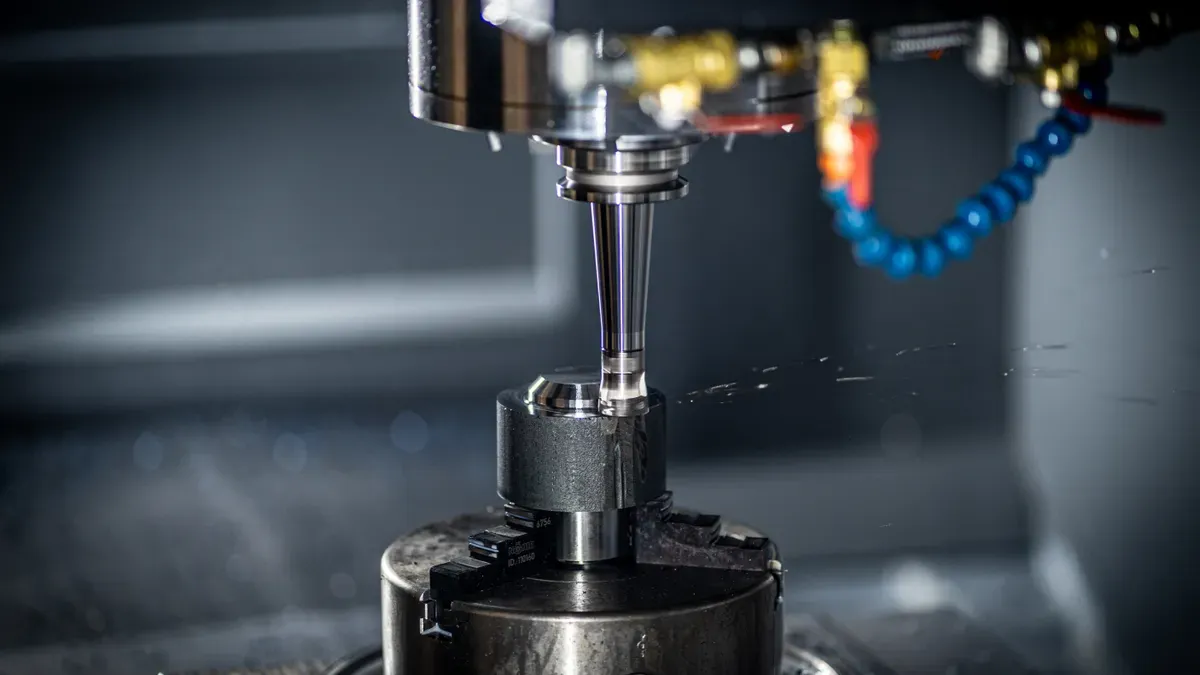
Every CNC milling machine has four main parts: the spindle, the cutting tool, the worktable, and the control unit. The spindle holds and spins the cutting tool at high speeds. This spinning gives the cutting motion for the milling operation. The cutting tool is a multi-point tool with teeth. End mills and face mills are common types. The worktable holds the workpiece and moves along the X and Y axes. It places the workpiece under the cutter. The control unit reads the G-code file and turns the program instructions into exact movement commands for the motors. A feedback system with transducers and sensors checks tool position and speed in real time. This closed-loop control ensures accuracy.
The control unit runs the CNC milling process through a series of steps. First, it loads the G-code file from CAM software. Then it reads each instruction. Next, it creates movement commands for the axes. It sends these commands to the servo motors. The motors drive ball screws to move the worktable or spindle. Encoder signals check the position and fix any errors. The controller also handles extra devices like coolant pumps and automatic tool changers. The CNC machine works with precision.
Other parts support these main elements. The machine bed gives rigid support and absorbs cutting forces. The coolant system pumps coolant to stop overheating. The driving system uses lead screws and motors. Together, these parts let the machine make components with tight tolerances. This precision is vital for CNC machining. Modern CNC milling machines from Zhongyi Precision Technology Co., Ltd. add multi-axis features for complex shapes.
CNC milling machines come in two main setups: vertical and horizontal. The spindle direction defines the difference. In a vertical mill, the spindle is perpendicular to the table. The tool rotates like a drill head. In a horizontal mill, the spindle is parallel to the table. The tool spins like a saw blade. The table below compares key features.
| Feature | Vertical Mill | Horizontal Mill |
| Spindle orientation | Perpendicular to table | Parallel to table |
Typical cutting speed | Moderate, suits detail work | Higher, suited for heavy cuts |
Chip evacuation | Chips may pile up; needs air blast | Chips fall clear; less recut risk |
Tooling capacity | One cutter at a time, quick change | Large arbor supports stacked cutters |
Cost (similar travel) | Lower entry price | 10–25% higher |
Floor space | Smaller footprint | Wider footprint |
Vertical mills are smaller and more flexible. They fit machine shops, custom tooling, and R&D departments. You can use them for many types of workpieces and materials. Horizontal mills are larger and more rigid. They handle heavy-duty industrial jobs and large production runs. The horizontal mill's spindle can be held at both ends, making it more rigid for heavy cuts. It also handles bigger cutters and allows stacking multiple cutters on an arbor for production setups. For precision facing, the horizontal mill reduces table sag, giving better flatness. Horizontal mills are best for large workpieces, high volume jobs, and any machining that needs more power for tougher material.
When you pick between vertical and horizontal, think about your workpiece size, complexity, and production volume. For prototyping and small batches, a vertical mill often works well. For mass production and heavy cuts, a horizontal mill is more efficient. CNC machining centers come in both setups. This CNC machining ability lets you create complex parts with high accuracy. The computer numerical control system ensures repeatability across every milling operation. Choosing the right CNC machining setup depends on your needs.
Every milling job starts with a digital blueprint. You create a solid 3D model in CAD software, making sure there are no open surfaces or geometry errors. This model defines every dimension, hole, and contour your final part needs. After finishing the design, you export it into a CNC-compatible format such as STEP, IGES, or DXF. CNC machines cannot read native CAD files, so this conversion is essential.
Next, CAM software takes over. This program turns your 3D model into toolpaths—the exact routes your cutting tool will follow. CAM sets feed rates, spindle speeds, and cut depth for each operation. It also creates the G-code that controls the milling machine. Modern CAM software simulates the whole milling process before the tool ever touches metal, preventing crashes and improving efficiency.
CAD creates the part geometry, while CAM defines how the CNC machine will cut that geometry into a finished component. Modern CAM software also helps with machine setup, process optimization, tooling data, simulation, and collision prevention before a program ever reaches the spindle.
Once your G-code is ready, you prepare the milling machine. First, clamp the raw stock securely using a vise, chuck, or fixture. The workpiece must hold firmly without warping. Next, load cutting tools into the spindle or automatic tool changer. Measure each tool's length and diameter offsets so the controller knows exact dimensions. Then, use an edge finder or touch probe to set part zero—the reference point for all machining coordinates.
Run a simulation or dry run in the air before cutting. This check prevents crashes and saves expensive materials. When everything looks good, start the milling process. The CNC machine follows the G-code line by line, removing material with precision. Standard production machining achieves tolerances of ±0.005 inches, while precision work reaches ±0.002 inches. Reamed holes can hit ±0.0005 inches for critical applications.
After machining, finishing operations complete your part. Deburring removes sharp edges for safety. Surface treatments like anodizing, electroplating, or powder coating enhance corrosion resistance and appearance. Polishing improves smoothness and reflectivity. Zhongyi Precision Technology Co., Ltd. provides DFM feedback during design, optimizing your part for manufacturability and cost. Their engineering team reviews your CAD files, suggesting design changes that reduce production time and expense. This collaborative approach ensures your milling operations deliver accurate, high-quality components every time.
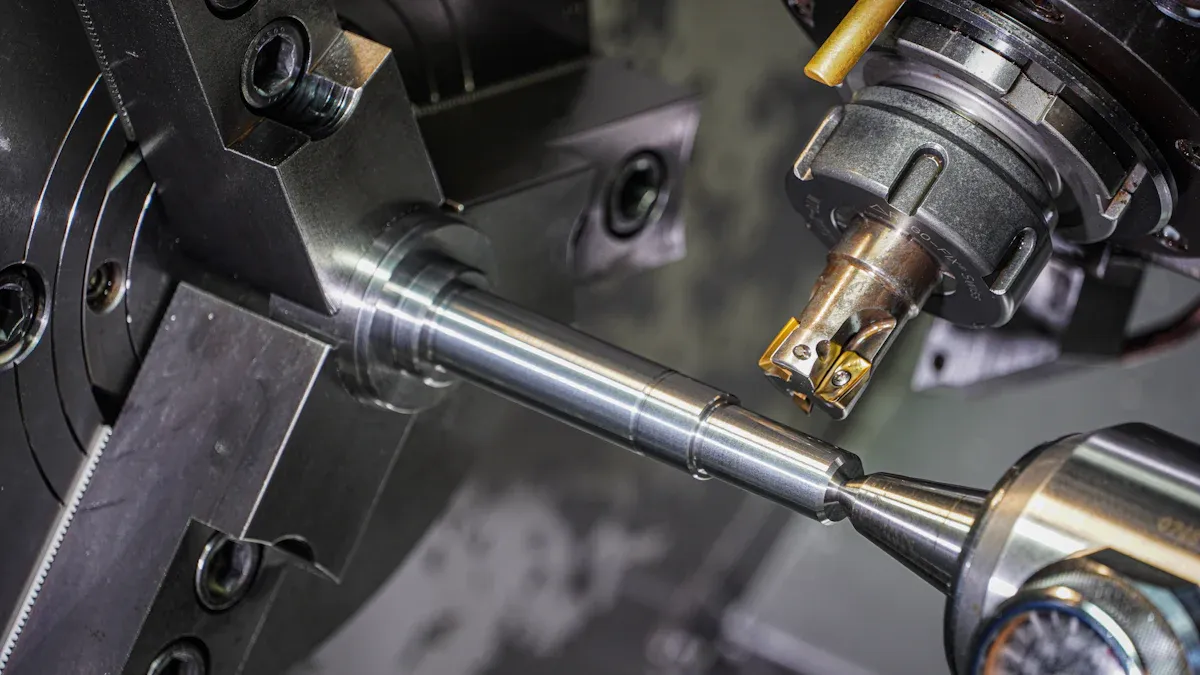
Face milling makes flat surfaces using a spinning tool with cutting edges on both the bottom and sides. You use this for big areas like engine blocks and machine frames. The large cutting surface removes material quickly while keeping the surface level. End milling uses a cutter with teeth on both ends and sides. This flexibility lets you make pockets, slots, keyways, and detailed shapes for molds, dies, and medical devices.
| Aspect | Face Milling | End Milling |
| Cutting Area | Face (bottom) of the tool | Sides & tip of the tool |
Tool Design | Larger diameter with indexable inserts | Smaller diameter, solid or insert-based |
Surface Finish | Excellent flatness on faces | Better for small details and accuracy |
Typical Application | Large flat surfaces, assembly prep | Pockets, slots, complex shapes |
Face mills need a strong spindle and torque because of their large size. End mills are smaller and more flexible. For flatness and speed, pick face milling; for shape and accuracy, pick end milling.
Slot milling cuts grooves and keyways. Regular slot milling works on 3-axis machines with fast material removal and easy programming, but deep slots need multiple passes. Trochoidal milling creates low side forces and works well on hard steels, though it needs more programming. Plunge milling fixes vibration issues with long tool overhangs but requires a final pass.
You can mill many materials. Aluminum cuts easily and suits aerospace and automotive parts. Stainless steel resists rust and works well for medical tools. Brass offers good machinability and conducts electricity. Plastics like Delrin provide low friction and hold their shape. Titanium and Inconel are very strong but need advanced methods.
| Industry | Why Milling Matters |
| Aerospace | Tolerances as tight as 0.00004 inches; safety-critical parts |
Medical | Life-critical precision for implants and instruments |
Defense | Strict standards; identical copies with no room for error |
Transportation | Safety requires precision and durability testing |
When picking a milling machine, think about your part size and complexity. Larger parts need horizontal mills with more rigidity. Tight tolerances require extra passes and stricter quality checks, raising cost. Higher quantities spread setup costs, lowering price per part. Always follow safety rules: use guards, coolant, and proper tool handling.
Zhongyi Precision Technology Co., Ltd. offers both prototyping and mass production with surface treatments like anodizing and electroplating. Their engineering team provides DFM feedback to improve your part for manufacturability. This mix of advanced cnc milling and expert guidance ensures your milling operations deliver accurate, high-quality parts every time.
The process relies on cutter rotation and workpiece feed. This milling process removes material with accuracy. A CNC milling machine uses a spindle and table. The milling machine handles slots and complex geometries. The milling process creates 5-axis shapes. This milling machine produces quality parts. The milling process delivers tight tolerances with accuracy. Modern manufacturing depends on this milling process. CNC controls ensure repeatable accuracy. CNC milling creates complex shapes. CNC machining offers reliable production. CNC production delivers tight tolerances. The milling process serves aerospace and medical sectors. This milling machine provides consistent results. Zhongyi Precision Technology Co., Ltd. offers CNC milling. Their CNC machining includes expert feedback. CNC production meets your specifications. CNC technology ensures precision. Request a free quote for your next CNC part.
CNC milling can hold tolerances up to ±0.005mm. That precision suits medical implants and aerospace parts. Your cnc milling machine achieves this accuracy through closed-loop feedback systems. The control unit checks tool position constantly. This repeatability means every part you produce matches the next one exactly.
You can mill aluminum, stainless steel, brass, titanium, and plastics like ABS or nylon. Aluminum cuts fastest and suits prototyping. Stainless steel resists corrosion for medical tools. Titanium offers strength but needs slower speeds. Your material choice affects tool wear, cycle time, and final cost.
Manual milling requires an operator to guide the cutter by hand. CNC machining automates this process using G-code instructions. Your cnc milling machine follows programmed toolpaths without human intervention. This automation delivers faster production, tighter tolerances, and consistent results across large batches. Manual methods still work for simple one-off jobs.
Your part geometry, material, tolerance, and quantity determine price. Complex shapes need more machining time. Tight tolerances require extra inspection passes. Higher volumes spread setup costs, lowering per-unit price. Surface treatments like anodizing add expense. Request a quote with your CAD file to get an accurate estimate.