English ![]()

No. 7, Tianyang 6th Road, Dongfang Community, Songgang Street, Bao'an District, Shenzhen, Guangdong, China(518100)
| The automotive industry demands manufacturing excellence across prototyping, low-volume production, and mass manufacturing. This guide explores six critical processes - CNC machining, die casting, plastic injection molding, sheet metal fabrication, which enable the production of high-perfomance automotive components. Our ISO 9001-certified facilities combine these technologies to deliver solutions from concept to final assembly, supporting OEMs and suppliers in achieving superior quality, cost efficiency, and faster time-to-market. |  |
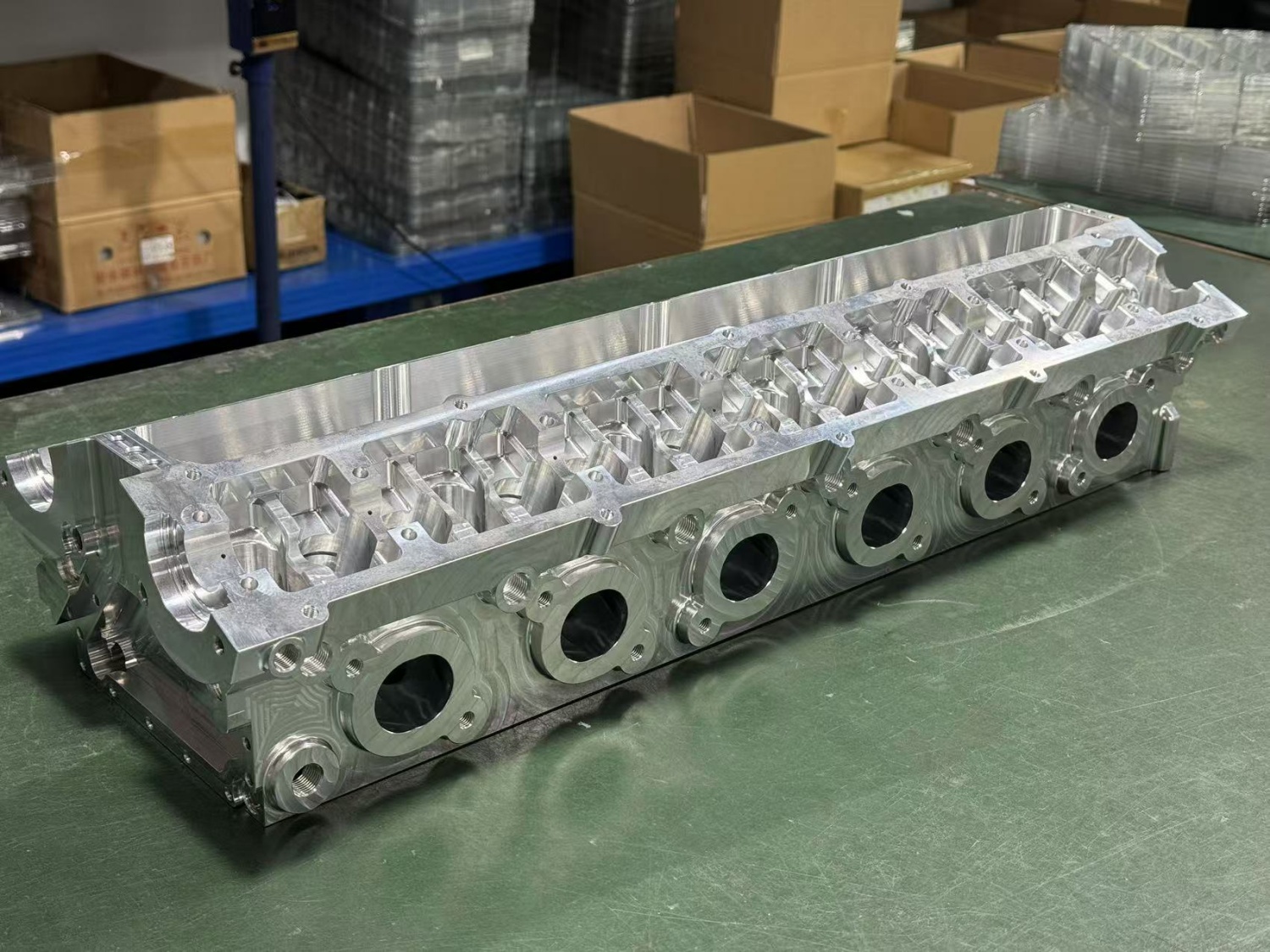
CNC Machining for Automotive ApplicationsCNC machining delivers uncompromising precision for critical drivetrain and chassis components: • Electric Vehicle Systems: Battery cooling plates (flatness within 0.05mm/m) Motor housings (true position ±0.025mm) Power electronics enclosures Chassis structural components Engine parts, gearbox gears Manufacturing Advantages: 60+ CNC machines (including 11-axis mill-turn centers) Material expertise: aluminum 6061-T6 to Inconel 718 IATF 16949-compliant quality system Average lead time: 5-7 days for prototypes
|
|
High-Pressure Die Casting Solutions Die casting enables lightweight, high-volume automotive components: • Engine Components: Cylinder heads (±0.01mm bore tolerance) Transmission cases (Ra 0.8μm surface finish) Turbocharger housings (5-axis machining capability) • Structural Components: EV battery trays (1.5m x 0.8m single-cast) Cross-car beams (torsional stiffness optimized) Suspension components (FEA-validated designs) | • Process Capabilities: 800-4,000 ton clamping force Vacuum-assisted casting (porosity <1%) In-die quenching for T7 heat treatment Typical tolerances: ±0.2mm per 100mm • Quality Assurance: X-ray inspection (ASTM E505 Level 1) CT scanning for critical parts 100% dimensional verification |
Plastic Injection Molding ExpertiseAdvanced molding solutions for interior and exterior applications: • Interior Systems: Instrument panels (Class A surfaces) HVAC components (UL94 V-0 compliance) Connector housings (0.2mm wall thickness) • Exterior Components: Lighting housings (weatherable PC/ABS) Grille assemblies (chrome-platable grades) Wheel arch liners (PP-TD20 material) Technical Highlights: 50-6600 ton molding machines Gas-assist and water-cooled molding In-mold decoration capabilities Cycle times optimized via Moldex3D simulation
|  |
Sheet Metal Fabrication CapabilitiesPrecision metal forming for body and structural parts: • Body-in-White: Bracket assemblies (±0.15mm tolerance) Reinforcement panels (HSLA steel) EV battery enclosures (IP67 sealing) • Manufacturing Technologies: 6KW fiber laser cutting (12mm steel capacity) Robotic bending cells (±0.1° repeatability) Resistance welding (100% nugget inspection)
|  |
1: What are your standard lead times for automotive prototype and production parts? Our tiered manufacturing system delivers: CNC machined samples: 5-7 days for aluminum/steel components Injection molded prototypes: 10-12 days with aluminum tooling Production lead times: Die casting: 4-6 weeks after mold approval Plastic injection: 2-4 weeks for medium volumes Sheet metal: 1-3 weeks depending on complexity All lead times include full inspection and quality documentation per automotive standards. | 2: How do you handle material certifications and traceability? We maintain complete material pedigree with: Mill test reports for all metal stock UL certification for plastic resins Batch-controlled material storage with RFID tracking Destructive testing archives (minimum 5 years) Material conformance reports meeting OEM requirements |
3: Can you help redesign components for cost reduction without compromising performance? Our value engineering services have achieved: 35% cost savings on transmission housing through optimized die casting design 22% weight reduction in suspension components via topology-optimized CNC machining 60% assembly simplification by converting 8-part welded assemblies to single die castings 17% material savings in plastic parts through wall thickness optimization We combine DFM analysis with advanced simulation tools to deliver these improvements while meeting all functional requirements. | 4: What advanced surface treatments do you offer for enhanced automotive performance? Our specialty finishes include: Plasma electrolytic oxidation for aluminum - 5x harder than anodizing Nanocoatings with <1μm thickness for corrosion protection Laser texturing for controlled friction surfaces (0.05-0.5μm Ra) Hybrid plating combining nickel-teflon for wear resistance IR-reflective coatings for thermal management Recent application: Our proprietary coating extended the service life of turbocharger components by 300% in durability testing. |