
English ![]()

No. 7, Tianyang 6th Road, Dongfang Community, Songgang Street, Bao'an District, Shenzhen, Guangdong, China(518100)
Views: 0 Author: Site Editor Publish Time: 2026-10-07 Origin: Site
Hardware engineers and procurement managers constantly face the classic "make vs. buy" dilemma. You must decide whether to adapt a brilliant design to fit standard catalog items. Alternatively, you can invest in bespoke manufacturing. This choice dictates how quickly your product launches. It also determines how well the final assembly performs in the field. Relying solely on standard catalog items often forces heavy design compromises. Such compromises limit your product's ultimate potential. Conversely, diving straight into bespoke manufacturing demands higher upfront capital. Bespoke procurement also requires strict quality management. You need a balanced strategy to navigate these competing pressures. A good strategy protects your budget during development. Moving from early prototypes to full-scale production requires rigorous evaluation. We will explore unit economics, supply chain resilience, and precise functional needs. You will learn actionable frameworks to make the most profitable procurement decisions. These frameworks ensure success for your next hardware project.
Standard components (COTS) minimize upfront engineering costs and lead times but force design compromises and carry obsolescence risks.
Custom machined parts require higher initial NRE (Non-Recurring Engineering) investment but offer strict IP protection, precise performance, and optimized part consolidation.
The decision should be driven by production volume, lifecycle stage, and performance criticality, rather than individual unit price alone.
Hybrid assemblies—using standard internals with custom housings or brackets—often provide the most scalable risk-to-reward ratio.
Modern manufacturing requires a clear baseline to compare procurement options. Commercial Off-The-Shelf (COTS) components represent pre-designed, mass-produced items available in public catalogs. You buy them exactly as they are. Bespoke manufacturing involves creating entirely new components tailored to your exact specifications. Each path offers distinct advantages and unique friction points.
To make the right choice, you must evaluate both paths through three core business drivers. These lenses clarify the true impact of your hardware decisions.
Speed matters in hardware development. We must compare the speed of prototyping against the speed of scaling. COTS items ship immediately for rapid proof-of-concept builds. However, scaling a custom solution often provides smoother long-term production once tooling is finalized.
You cannot judge a part solely by its initial piece price. We must weigh the upfront cost against long-term assembly expenses. Standard items look cheap initially. Yet, they might require expensive secondary assembly steps. Evaluating the complete lifecycle expenditure prevents budget overruns down the road.
Your procurement choice directly affects your market position. We must contrast commodity functionality with proprietary intellectual property. Standard items offer basic, widely available features. Bespoke components embed your unique engineering innovations directly into the hardware.
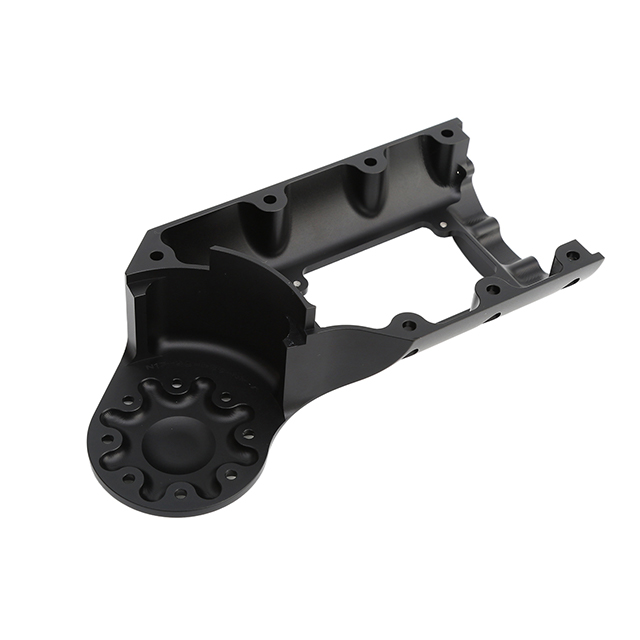
Standard components play a vital role in almost every hardware assembly. They provide an undeniable foundation for rapid engineering. Knowing when to use them is a core engineering skill.
The primary advantage of standard items is immediate availability. You can order a thousand standard screws today and receive them tomorrow. Furthermore, these items often carry standardized compliance certifications. Organizations like ISO and DIN pre-certify these geometries. This pre-certification simplifies your internal quality audits. COTS components also offer predictable baseline costs. They are best used for non-critical fasteners, standard bearings, and generic internal housings.
Despite their convenience, standard components carry significant hidden risks. Engineering teams must view these catalog items through a skeptical lens.
Design Compromise: Forcing an innovative product to fit a standard footprint causes problems. It often leads to bulky, suboptimal end products. You might have to increase the size of an entire enclosure just to fit a standard motor mount.
Supply Chain Vulnerability: Reliance on a single standard item creates a dangerous bottleneck. Production can halt completely if the original manufacturer phases out the SKU. This obsolescence risk forces unexpected redesigns late in a product's life.
Tolerance Stacking: Compiling multiple standard pieces increases dimensional risks. Each item carries a slight manufacturing variance. When you bolt four standard items together, these tiny variances add up. This cumulative tolerance error often leads to catastrophic assembly failures.
When standard options fail, custom machined parts step in to solve complex engineering bottlenecks. They allow teams to push the boundaries of physics and design.
Bespoke manufacturing solves the exact problems catalog items create. You can achieve extreme weight reduction by removing unnecessary material. You can tailor material choices for high-stress environments. You can design geometries specifically for tight space constraints. Bespoke engineering removes the design shackles imposed by mass-market catalogs.
One of the greatest advantages of bespoke design is part consolidation. You can design a single, unified component to replace three or four separate standard items. This strategy reduces assembly time on your factory floor. It also eliminates multiple failure points. Fewer bolted joints mean fewer places for vibrations to cause a breakdown.
Different bespoke processes solve different engineering challenges. Understanding these methods helps you specify the right solution.
For example, custom CNC milling parts provide the complex, asymmetric geometries required for aerospace housings. Standard aluminum extrusions simply cannot achieve strict multi-axis tolerances. Milling carves out intricate pockets and precise mating surfaces.
Similarly, custom CNC turning parts deliver the precise rotational symmetry necessary for specialized drive shafts. Turning centers create flawless pins and custom fittings. They allow you to demand unique threads or proprietary material grades unavailable in catalogs.
Bespoke components secure your product's "secret sauce." When you design a unique mechanical mechanism, competitors cannot simply look up the part number. Custom geometries make reverse-engineering significantly harder. This physical barrier protects your market share.
Financial discussions around bespoke manufacturing often focus on the wrong metrics. Evaluating outcomes requires looking past the simple per-unit price tag.
We must acknowledge the upfront costs associated with bespoke manufacturing. Non-Recurring Engineering (NRE) represents a significant initial hurdle. You must pay for CAD modeling and CAM programming. Your vendor must design custom fixturing and purchase specialized tooling. These fixed costs apply before the first chip is even cut.
Understanding the "break-even" point is critical. At very low volumes, COTS is undeniably cheaper. You avoid the heavy NRE burden. However, the math changes at high volumes. Optimizing a bespoke design for manufacturability (DFM) drives the per-unit cost down dramatically. Eventually, the lower per-unit cost offsets the initial NRE investment. Your aggregate profitability actually increases.
Sourcing high-quality custom CNC machined components has never been easier thanks to digital manufacturing networks. The industry has matured rapidly. You no longer need to set up an internal machine shop to get bespoke parts. Rapid, scalable external procurement mitigates massive capital expenditure risks. You tap into global capacity on demand.
Shifting from catalog buying to bespoke procurement introduces new operational challenges. Supply chain leaders must manage these risks proactively.
Standard items usually arrive with pre-existing material certifications. The vendor handles the quality control baseline. Bespoke manufacturing shifts some responsibility back to you. Your custom orders require rigorous First Article Inspection (FAI) protocols. You must partner with vendors who maintain trusted quality management systems. Certifications like AS9100 ensure your unique designs meet strict industry standards.
Many engineering teams attempt to compromise by modifying catalog items. They buy an off-the-shelf bracket and send it to a local shop for extra hole drilling. We strongly warn against this mistake. Secondary machining of standard items often results in terrible lead times. The process ruins existing surface finishes. Ultimately, it generates higher expenses than designing a bespoke item from scratch. The setup time for modifying a cast part usually exceeds the time required to machine it from a raw block.
Catalog items usually offer faster replenishment. You simply place an order and wait for the delivery truck. Bespoke manufacturing operates differently. Machine shops require scheduling and setup time. You must acknowledge lead time volatility. This reality requires strategic buffer stock planning. Managing bespoke inventory requires tighter communication between engineering and purchasing teams.
Theoretical knowledge must translate into practical action. We developed a clear framework to help you navigate your next procurement cycle. Use this logic to evaluate every item on your Bill of Materials (BOM).
Is the function highly specialized or IP-critical? If the component drives your core competitive advantage, choose bespoke manufacturing. Protect your innovations.
Are there strict weight, space, or extreme material requirements? If your assembly operates in harsh environments or tight constraints, choose bespoke manufacturing. Standard catalogs cannot accommodate extreme boundary conditions.
Is the product in early proof-of-concept? If you are testing a rough idea, choose standard items. You can always migrate to bespoke solutions later when the core design stabilizes.
| Evaluation Criteria | Standard Components (COTS) | Bespoke Manufacturing |
|---|---|---|
| Initial NRE Costs | Very low to none | High (CAM, Tooling, Fixtures) |
| Lead Time (Initial) | Immediate / Next Day | Weeks (Depends on complexity) |
| Design Flexibility | Rigid, fixed geometry | Unlimited, tailored geometry |
| Obsolescence Risk | High (Vendor SKU changes) | Low (You own the CAD data) |
| Best Lifecycle Stage | Early Prototyping | Scaling & Mass Production |
The smartest engineering teams do not choose just one path. We recommend adopting a hybrid approach. Identify the 20 percent of parts that drive 80 percent of your product's value. Make these critical items bespoke. Specify standard hardware for the remaining non-critical elements. Use catalog screws, springs, and bearings to hold your proprietary housings together. This strategy provides the most scalable risk-to-reward ratio.
There is no one-size-fits-all answer in hardware procurement. The choice between standard catalog items and bespoke manufacturing hinges on your specific operational goals. Standard items provide speed and low initial costs. Bespoke solutions unlock superior performance, strict IP protection, and part consolidation. You must evaluate each component based on production volume, lifecycle stage, and functional criticality. We encourage you to consult with a trusted manufacturing partner today. Upload your CAD files for a comprehensive Design for Manufacturability (DFM) review. Getting hard data on lead times and unit costs will clarify your path forward.
A: You should transition when production volumes begin to scale rapidly. It is also wise to switch when standard items cause assembly bottlenecks on the factory floor. Furthermore, transitioning makes sense when iterating to a "version 2.0" product that requires a smaller footprint or significantly lighter weight.
A: Upfront, yes. They require NRE investments. However, if a bespoke piece replaces a clunky assembly of three standard items, it can lower your overall factory labor expenses. It also improves field reliability, which reduces warranty claims and aggregate expenditures over time.
A: Off-the-shelf items often require buying in bulk packs of thousands. Modern CNC machining partners operate differently. They often offer bespoke items with very low or zero MOQs. This flexibility makes bespoke prototyping highly accessible for small engineering teams.
A: Yes. You can use them safely provided your manufacturing partner supplies full material traceability. They must offer valid certifications like AS9100 or ISO 13485, alongside rigorous quality documentation. Standard items are not inherently more compliant; they are simply pre-certified by the catalog vendor.


