
English ![]()

No. 7, Tianyang 6th Road, Dongfang Community, Songgang Street, Bao'an District, Shenzhen, Guangdong, China(518100)
Views: 0 Author: Site Editor Publish Time: 2026-10-05 Origin: Site
Sourcing industrial components often yields a frustratingly wide range of quotes for the exact same CAD file. You look at the proposals and struggle to distinguish between artificially inflated prices and necessary premiums for quality. This confusion wastes time and jeopardizes project budgets. Accurate pricing is never arbitrary. It directly reflects machine-hour economics, material science, and risk mitigation strategies. Every design choice you make carries a specific financial consequence on the shop floor.
This article provides technical buyers and engineers a transparent framework to evaluate quotes. We will show you exactly what drives manufacturing costs up. You will learn how to identify where you can optimize specifications without sacrificing functionality. Ultimately, understanding these hidden cost drivers helps you secure fair pricing for your projects.
Material costs are secondary to machining time; a cheaper raw material that is harder to cut can increase overall part cost.
Arbitrary tight tolerances are the leading cause of exponential price hikes due to increased setup, slower feed rates, and higher scrap risks.
Setup times amortize heavily over volume; prototyping carries a premium that drops off sharply in low-to-mid volume production.
Hidden cost drivers often lurk in post-processing, expedited lead times, and required compliance documentation.
Buyers often look strictly at raw commodity prices. However, machinability ultimately dictates the actual cost of your custom machined parts. A cheap material can easily become your most expensive option if it slows down production.
Manufacturers price raw materials by volume and market availability. Standard metals like Aluminum 6061 serve as the industry baseline. They offer excellent availability and low baseline costs. Premium metals require a higher initial investment. Stainless Steel 304 and 316 cost more due to their alloying elements. Titanium commands a massive premium because of its complex extraction and refining processes.
Plastics present another unique pricing model. Do not assume plastics are universally cheaper than metals. Standard polymers like Delrin or ABS remain cost-effective. However, high-performance engineering plastics carry extreme price tags. PEEK (Polyether ether ketone) often costs significantly more per cubic inch than many aerospace-grade metals. You must weigh the raw cost against the specific environmental demands of your application.
Material hardness directly impacts tool wear and machine speeds. Softer materials allow machines to run at optimal feed rates. Harder alloys force operators to slow down the equipment. Slower feeds increase the total machine hours required to complete your part.
Tool wear introduces another hidden expense. Titanium and hardened steels degrade cutting tools rapidly. Shops must constantly replace dull end mills. They pass these tooling costs directly to you. Hard materials also generate more heat. Managing this heat requires specialized coolants and slower cutting passes.
Consider this practical decision lens. A slightly more expensive material with excellent machinability often yields a cheaper final part. Aluminum might cost more per pound than basic carbon steel. However, aluminum cuts three times faster. The massive savings in machine time easily offset the higher raw material expense.
Table: Material Cost vs. Machinability Comparison
| Material Type | Relative Raw Cost | Machinability Rating | Tool Wear Impact |
|---|---|---|---|
| Aluminum 6061 | Low | Excellent | Minimal |
| Stainless Steel 304 | Medium | Fair | Moderate |
| Titanium (Grade 5) | High | Poor | High |
| PEEK (Plastic) | Very High | Good | Low (but requires care) |
Geometry dictates the type of equipment your project requires. Simple designs run on standard 3-axis mills. Complex geometries force manufacturers to use advanced multi-axis setups. More advanced machines carry significantly higher hourly rates.
Evaluating CNC milled custom parts requires a close look at internal features. Deep pockets cause major manufacturing headaches. They require long, slender cutting tools. Long tools vibrate and chatter during heavy cuts. Operators must reduce feed rates drastically to prevent tool breakage. Undercuts and non-standard radii also demand specialized tooling. Custom tools increase your lead times and upfront expenses.
Alternatively, rotational symmetry offers massive cost advantages. CNC turned custom parts utilize lathe equipment. Lathes spin the workpiece against a stationary cutting tool. This continuous cutting action removes material much faster than intermittent milling. Whenever possible, design your cylindrical geometries for lathe production rather than relying on complex milling interpolation.
Machine setup drives a large portion of your final bill. Every time a part requires manual flipping, labor costs increase. The operator must stop the machine, unclamp the part, clean the fixture, and reposition the component. Each manual intervention stops active production.
Repositioning also compounds precision risks. Every new setup introduces a slight margin of error. If your design features tight tolerances across multiple faces, a 3-axis machine might require four separate setups. A 5-axis machine can often handle the same part in a single setup. While the 5-axis machine costs more per hour, eliminating three manual setups often lowers the total price.
Keep implementation risks in mind. Designs lacking flat clamping surfaces require custom workholding. Manufacturers must engineer and build soft jaws or dedicated jigs just to hold your part. These custom fixtures incur steep upfront engineering costs. You pay for these fixtures before the first production chip even flies.
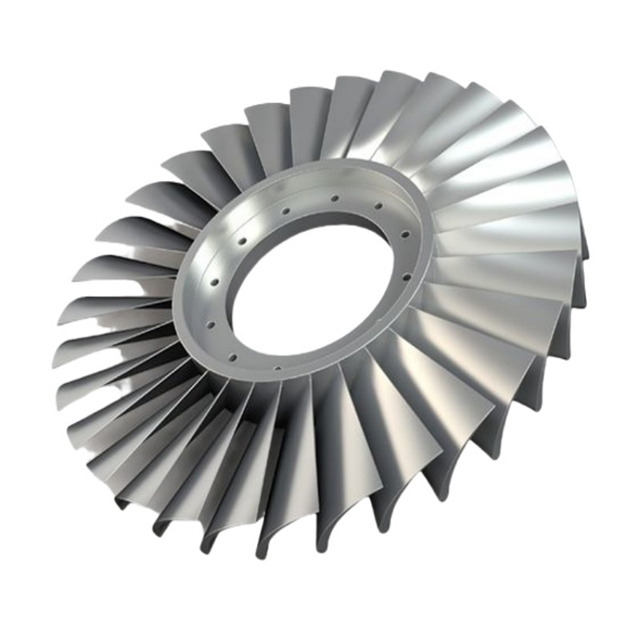
The cost curve for dimensional tolerances is exponential, not linear. Shrinking a tolerance from standard to ultra-tight does not double the cost. It often multiplies the cost by a factor of four or five.
Most reputable shops consider +/- 0.005 inches as a baseline industry standard. Modern equipment holds this standard reliably without excessive intervention. Tight tolerances drop down to +/- 0.001 inches or tighter. Achieving these microscopic margins requires intense control over the entire machining environment.
Certain industries absolute demand this level of exactness. Aerospace components and medical devices rely on precision custom machined parts to function safely. However, applying tight tolerances universally across a part is a common engineering mistake. Over-engineering non-critical areas forces the manufacturer to slow down the entire process for no functional benefit.
Tighter tolerances require rigorous environmental controls. Metals expand and contract with temperature changes. Hitting a +/- 0.0005 inch requirement demands climate-controlled facilities. Machines require frequent thermal stabilization and recalibration. All these overhead costs are ultimately billed directly to the buyer.
Metrology also slows down production. Verifying tight dimensions requires a Coordinate Measuring Machine (CMM). CMM inspection pulls highly paid quality engineers away from other tasks. Furthermore, tight tolerances increase scrap rates. If the machine tool deflects even slightly, the part fails inspection. The manufacturer bakes this scrap risk into your initial quote.
Follow strict success criteria during the drafting phase. Apply GD&T (Geometric Dimensioning and Tolerancing) strictly to mating surfaces. Leave clearance holes and non-critical cosmetic features at standard tolerances. This simple discipline slashes manufacturing costs immediately.
Buyers often experience sticker shock when ordering a single prototype. A single component might cost $200. However, a production run of 500 units drops the individual price to $15. Understanding setup amortization explains this dramatic price drop.
Every project carries fixed expenses regardless of the batch size. Before machining begins, a CAM (Computer-Aided Manufacturing) programmer must translate your 3D CAD model into machine code. This programming takes time and highly specialized skill. Next, the machinist must clean the workspace, install the correct workholding, and load specific cutting tools into the carousel. Finally, they run a test piece to verify dimensions.
These fixed upfront costs remain constant. If the programming and setup cost $300, ordering one part means that single part absorbs the entire $300 burden. If you order 100 parts, the setup cost divides evenly. Each part now carries only a $3 setup burden.
Use smart shortlisting logic when selecting a vendor. You must match the supplier’s core competency to your current lifecycle stage. Do not use a high-volume automotive supplier for rapid prototyping. They will overcharge you to cover their massive setup disruptions. Conversely, do not use a small rapid-prototyping shop for a run of 10,000 units. They lack the automated pallet pools required for true economies of scale.
The manufacturing process does not end when the part comes off the machine. Secondary operations significantly alter the final quote. Many buyers overlook these critical downstream expenses.
An "as-machined" finish remains the most economical choice. It leaves visible tool marks but costs nothing extra. Applying secondary finishes adds labor, time, and external vendor costs. Bead blasting provides a uniform matte appearance but requires manual labor. Anodizing adds a protective oxide layer to aluminum. Powder coating and plating offer superior durability but require specialized chemical baths.
Outsourced finishing introduces batch minimums. Anodizing facilities rarely charge per part for small runs. They charge a minimum lot fee, often around $150. If you only need five parts anodized, you still pay the full $150 lot fee. This drastically inflates the unit cost of low-volume orders.
Strict industries demand comprehensive paperwork. Material Test Reports (MTRs) verify the chemical composition of your raw metal. A Certificate of Conformance (CoC) guarantees the parts meet your exact drawing specifications. First Article Inspection (FAI) reports require a quality engineer to measure and document every single callout on your blueprint.
Generating this documentation requires extensive administrative and engineering labor. You are paying for the quality engineer's time. Reputable machine shops will itemize these compliance costs clearly on your quote. This transparency builds trust. Beware of suppliers who hide documentation fees inside inflated part margins.
Transitioning from understanding costs to making a final vendor decision requires a structured approach. You must look beyond the bottom-line price and evaluate the supplier's overall capability.
Consider the following evaluation dimensions:
Transparency: Does the quote break down setup, material, and unit costs separately? Clear itemization proves the shop understands their own internal economics.
DFM Feedback: Does the manufacturer proactively suggest design tweaks? The best partners offer Design for Manufacturability (DFM) advice to lower your costs.
Lead Time Reliability: Are they realistic about capacity? Some vendors promise impossible deadlines just to win the bid, only to deliver weeks late.
Take immediate next-step actions to improve your sourcing. Standardize your Request for Quote (RFQ) process across the board. Always provide clean 3D CAD models. Pair them with fully toleranced 2D PDF drawings. The 3D model drives the machine code, but the 2D drawing dictates the inspection criteria. Providing both ensures you receive accurate, apples-to-apples quotes from every vendor.
Controlling the cost of custom machined components begins in the engineering design phase. It ends with transparent, ongoing supplier communication. Every tight tolerance, deep pocket, and material choice directly impacts your final invoice. Recognize that machine setup, tool wear, and inspection labor represent the true hidden costs behind your parts.
We encourage you to treat manufacturing partners as early-stage consultants rather than just transaction endpoints. Engaging a machinist during the design phase helps identify expensive geometry before it gets locked into a final drawing. This proactive approach saves time and protects your budget. Submit your CAD files today for a comprehensive, itemized quote and thorough DFM review.
A: Single parts carry the entire burden of fixed upfront costs. CAM programming, machine setup, and initial tool loading take hours to complete before cutting begins. In high-volume runs, these fixed costs spread across hundreds of units. For a single prototype, the one part absorbs 100% of the engineering and setup labor.
A: Yes. Specifying finer surface roughness (lower Ra values) directly increases machine time. Achieving a smooth finish requires slower feed rates and multiple light finishing passes. In extreme cases, it forces operators to perform manual polishing. This extra labor and machine time drive up the final price.
A: You can reduce costs by opening up tolerances on non-mating surfaces. Standardize your internal radii to match common tool sizes, preventing the need for custom cutters. Additionally, choose highly machinable materials whenever the application allows. Avoid over-engineering cosmetic features.
A: 5-axis machines carry much higher hourly operational rates due to their complexity and equipment cost. However, they can lower total production costs for highly complex parts. 5-axis equipment eliminates the need for multiple manual setups and custom fixtures, drastically reducing labor time and precision risks.


