
English ![]()

No. 7, Tianyang 6th Road, Dongfang Community, Songgang Street, Bao'an District, Shenzhen, Guangdong, China(518100)
Views: 0 Author: Site Editor Publish Time: 2026-10-02 Origin: Site
Product development moves incredibly fast today, yet iteration bottlenecks frequently derail your entire project timeline. Engineering managers and product developers often confront a difficult truth during the design cycle. Physical validation remains the slowest, most rigid phase of the operation. Hardware iteration delays directly impact your crucial Time-to-Market (TTM).
Many teams rely heavily on 3D printing for early models. However, these printed parts often fall completely short on rigorous mechanical validation. Meanwhile, traditional injection molding tooling proves far too slow and rigid for early-stage conceptual development. You need a better bridge between concept and final production.
Partnering with professional CNC machining services shifts prototyping from a frustrating procurement hurdle into a strategic accelerant. You secure true production-grade validation without suffering long tooling lead times. This method provides highly accurate, functional parts in days. It demands upfront Design for Manufacturability (DFM) collaboration, going beyond mere fast machine speeds. Let us explore five distinct ways this manufacturing approach accelerates your hardware iteration cycles.
Simultaneous Multi-Axis Machining: Consolidates setups to slash lead times and minimize manual re-fixturing errors.
Production-Grade Material Validation: Allows functional testing with end-use metals and engineering plastics, bypassing the mechanical limits of additive manufacturing.
DFM-Driven Iteration: Early manufacturability feedback prevents late-stage redesigns and unexpected scaling costs.
Scalability: A capable CNC partner provides a seamless bridge from initial single-unit prototypes to low-volume pilot runs.
Vendor Selection Matters: Quality inspection capabilities (CMM, material traceability) are as critical as machining speed when choosing a partner.
Complex geometric parts traditionally demand multiple setups on standard 3-axis machines. The operator must machine one side, stop the spindle, unclamp the workpiece, and rotate it manually. They then re-fixture the part before resuming operation. Every single manual intervention drastically increases human error risk. It consumes valuable labor hours. Overall lead times suffer heavily as a result of these sequential operations.
The most effective solution involves utilizing 5-axis CNC machining prototypes. Continuous 5-axis technology approaches the workpiece from nearly any angle. The cutting tool and the machine bed move simultaneously across five distinct axes. It accomplishes all complex geometries in a single setup.
This single-setup approach slashes fixture design time dramatically. Engineers no longer need to design custom soft jaws for five different orientations. It entirely eliminates manual part handling between cutting operations. You gain significantly tighter relational tolerances across complex features. Such precision proves absolutely critical for aerospace turbine blades or automotive steering knuckles. Any microscopic alignment error during manual re-fixturing ruins these high-stakes components.
We must acknowledge a common industry concern regarding this technology. Advanced 5-axis programming requires highly specialized CAM expertise. Poor toolpath programming can cause catastrophic machine crashes. However, premium service providers absorb this technical complexity entirely. They handle the intricate toolpaths and collision simulations behind the scenes. You simply receive your physical parts faster, mitigating internal engineering risks.
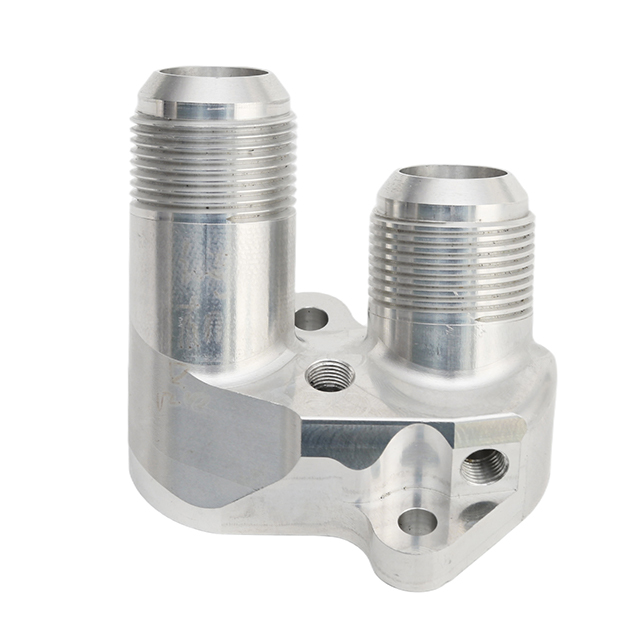
Engineers often optimize designs purely within ideal CAD environments. They sometimes overlook real-world subtractive manufacturing constraints. Your digital model might feature excessively deep internal corners. It could include non-standard threads, undercut features, or impractically thin walls. These specific features become impossible or excessively costly to machine at scale.
You need Design for Manufacturability (DFM) as an embedded, proactive service. You cannot treat it as an afterthought right before production launch. Utilizing custom CNC milling for prototypes serves as an early diagnostic tool. It prepares your product for flawless scale manufacturing. During this initial phase, expert machinists conduct strict DFM evaluations.
Tooling Access Verification: They verify standard end mills can physically reach all internal pockets without colliding into the part walls.
Custom Cutter Reduction: They identify non-standard features. They suggest modifications to eliminate the need for specialized, expensive tooling.
Radii Standardization: They adjust internal corner radii to match standard tool diameters exactly. This simple geometric change reduces machining cycle time significantly.
Catching an un-machinable feature early delivers immense financial ROI. You identify the critical flaw during the low-cost prototype phase. This proactive step saves weeks of tooling delays later. It prevents thousands of dollars in emergency revision costs when you enter pilot production. You ensure a highly seamless transition from digital concept to physical reality.
Prototype testing ultimately fails if material properties do not match the final production environment accurately. You need exact tensile strength, yield strength, and thermal resistance data. SLA and FDM 3D printing often fall completely short here. They rely heavily on weaker additive polymer proxies. These layered materials exhibit inherent anisotropic weaknesses. They simply cannot survive aggressive functional testing or extreme environmental exposure.
Machining directly from solid, production-grade billets solves this problem instantly. You gain exceptional material integrity. You can test common engineering materials exactly as they will perform in the field. There is no guessing game regarding structural performance.
We routinely see engineers validating designs using high-performance alloys and engineering polymers. You can immediately subject these robust prototypes to real-world stress testing. Medical device companies use them directly for rigorous ISO regulatory compliance trials. Automotive engineers place them inside testing environmental chambers. They test for extreme thermal cycling and fluid degradation.
Table 1: Common Prototype Materials and Testing Applications
| Material Category | Specific Alloy / Polymer | Key Engineering Property | Ideal Testing Scenario |
|---|---|---|---|
| Titanium Alloys | Ti-6Al-4V | Exceptional strength-to-weight ratio | Aerospace structural components, implants |
| Aluminum Alloys | 6061-T6 / 7075 | High machinability, thermal conductivity | Automotive brackets, electronic heat sinks |
| Stainless Steel | 316L | Superior corrosion resistance | Medical surgical devices, fluid handling |
| Engineering Plastics | PEEK, Delrin (Acetal) | Low friction, high thermal stability | Wear components, electrical insulators |
Hardware product development rarely stops at version one. Version changes between V1 and V2 prototypes often reset the entire manufacturing clock. Every minor CAD adjustment historically caused unpredictable production delays. It forced machine shops to rewrite G-code and build new custom fixtures manually.
You can accelerate these critical iteration cycles using modern digital twin technology. Advanced CNC providers utilize highly sophisticated CAM software environments. They simulate complete toolpaths digitally before cutting any physical metal. They monitor spindle loads, chip evacuation, and tool deflection entirely in the software.
This digital simulation eliminates physical trial-and-error completely. It prevents catastrophic tool crashes on the actual machine. When an engineer submits a revised CAD file, the programmer quickly adapts the digital twin model. They can execute rapid reprogramming in mere hours rather than days.
This evidence-oriented approach reduces first-run failure rates to near zero. You achieve highly predictable delivery schedules for every iterated version. The timeline shifts confidently from "weeks" to "days." Your engineering team stays perfectly agile. They can test multiple physical iterations comfortably within the original project timeline.
Many companies make the mistake of switching vendors between the prototyping phase and low-volume production. This transition introduces severe operational friction. It causes massive knowledge loss and introduces new Quality Assurance (QA) risks. The new manufacturing vendor faces steep onboarding delays. They have to relearn your part geometries and tolerances entirely from scratch.
You can effectively bridge this gap by using the same machining service to scale. This strategy demonstrates true manufacturing scalability. Once your team validates the initial prototype, the hardest groundwork is already complete. Your trusted CNC partner has established the optimized cutting toolpaths. They have designed and tested the custom work-holding fixtures. They have documented the strict QA protocols and inspection routines.
Moving your order from a single unit to 500 units requires minimal friction. The machine shop simply loads the proven program and scales up raw material procurement. This seamless transition allows agile startups to hit the market significantly faster. Enterprise engineering teams can launch pilot runs without facing typical supply chain bottlenecks. You leverage early prototyping not just for testing, but as the direct launchpad for scalable production.
The modern manufacturing market feels incredibly saturated today. Thousands of machine shops claim rapid turnaround times online. Buyers must carefully separate credible engineering partners from low-tier job shops. You need strict, evidence-based evaluation criteria. Use the following framework when shortlisting reliable rapid CNC prototyping services.
Chart: Vendor Evaluation Decision Matrix
| Evaluation Category | Critical Assessment Requirements | Direct Business Impact |
|---|---|---|
| Quality Assurance | First Article Inspection (FAI) reports, CMM verification | Guarantees tight verifiable tolerances (+/- 0.001" to +/- 0.005") |
| Certifications | ISO 9001, AS9100, ISO 13485 | Ensures strict industry compliance for aerospace or medical parts |
| Material Traceability | Material Test Reports (MTRs) provided upon request | Prevents counterfeit materials; ensures raw material authenticity |
| IP Protection | Strict NDAs, secure file transfer protocols | Safeguards proprietary tech and military/defense designs |
Quality Assurance & Inspection: Always ask potential vendors about their internal inspection tools. Do they offer First Article Inspection (FAI) reports? Can they provide Coordinate Measuring Machine (CMM) verification? They must verify standard and tight tolerances reliably.
Certifications & Compliance: Look for specific, active quality management systems. ISO 9001 covers general manufacturing excellence. AS9100 dictates rigid aerospace standards. ISO 13485 governs pristine medical device production.
Material Traceability: Low-cost shops sometimes substitute inferior, uncertified alloys. Reliable partners readily provide material test reports (MTRs). You guarantee raw material authenticity every single time, avoiding catastrophic field failures.
IP Protection: Closely assess their data security protocols. Do they use highly secure file transfer methods? They must willingly sign strict NDAs before viewing CAD files. This proves crucial for military applications and proprietary hardware tech.
CNC prototyping represents a strategic, high-value investment in risk mitigation. It directly accelerates your time-to-market. Multi-axis technology eliminates costly setup delays. Real-world materials ensure highly accurate physical validation. Integrated DFM prepares your complex design for seamless future scaling.
The right manufacturing partner treats your prototype completely differently than an average job shop. They do not view it as a one-off transactional burden. They treat it as the critical foundational step for scalable production. You build a repeatable, highly efficient manufacturing pipeline from day one.
Take the crucial next step in your hardware development journey. Upload your CAD file today for a comprehensive DFM review. You will receive a secure quote and a precise timeline estimate for your next iteration. Let us transform your digital concept into a market-ready physical product.
A: It machines five distinct sides of a part in a single setup. This capability eliminates the hours typically required to manually unclamp, rotate, and re-fixture the part. By minimizing manual handling, you also drastically reduce the potential for costly, time-consuming alignment errors.
A: Upfront costs may initially be higher than basic 3D printing. However, CNC machining becomes strictly necessary for true validation. It proves ultimately more cost-effective when functional testing requires specific mechanical properties. Additive manufacturing simply cannot provide end-use production-grade materials or tight relational tolerances.
A: Standard commercial tolerances typically hover around +/- 0.005 inches (0.127 mm). Highly capable services can achieve precision tolerances down to +/- 0.001 inches (0.025 mm). The exact achievable precision depends heavily on the chosen raw material and the overall part geometry.
A: Turnaround times generally range from one to five business days. This timeframe depends on part complexity, material availability, and current machine capacity. Advanced shops expedite this process further by using automated quoting systems and integrated CAM simulation software.


