
English ![]()

No. 7, Tianyang 6th Road, Dongfang Community, Songgang Street, Bao'an District, Shenzhen, Guangdong, China(518100)
Views: 0 Author: Site Editor Publish Time: 2026-08-17 Origin: Site
The commercial UAV and aerospace sectors require rapid hardware iteration. Functional flight testing demands components that do not compromise on structural integrity, weight, or aerodynamics. Transitioning from CAD models to physical prototypes often exposes the limitations of additive manufacturing. 3D printed parts frequently fail to replicate the exact mechanical behaviors needed when subjecting a drone frame to high-G maneuvers or heavy payload operations. Material fatigue, anisotropy, and poor load-bearing capacity under flight stresses are common issues that derail testing schedules. To bridge the gap between concept and production-grade reality, engineering teams must evaluate how professional CNC machining services provide the necessary tolerances, verifiable material properties, and scalability required for rigorous drone hardware development. This approach eliminates the guesswork from structural validation, allowing you to push airframes to their absolute limits during field trials with complete confidence in the underlying hardware.
Subtractive manufacturing delivers production-grade mechanical properties (e.g., using 6061-T6/T651 aluminum or engineering plastics) essential for structural drone components like frames, gimbals, sensor housings, and motor mounts.
Tight tolerances achieved through CNC processes are critical for aerodynamic stability, vibration dampening, and precise payload integration.
Selecting a machining partner requires evaluating their capacity for rapid iteration, digital Design for Manufacturability (DFM) feedback, and seamless transition from low-volume prototyping (1-50 units) to production.
Proactive DFM—such as standardizing internal radii and avoiding excessively thin walls—is the primary lever for controlling prototyping costs and reducing lead times.
Developing functional UAV prototypes requires meeting strict engineering requirements. Success criteria heavily depend on maximizing the strength-to-weight ratio. Every additional gram reduces flight time and battery efficiency. Engineering teams must design structural components that withstand significant aerodynamic loads without adding unnecessary mass. Whether developing a quadcopter for aerial surveying or a fixed-wing VTOL aircraft for long-range deliveries, the airframe must remain rigid under stress.
Vibration isolation presents another major hurdle in drone design. Brushless motors generate high-frequency vibrations that easily transfer through rigid frames. If these vibrations reach the central chassis, they disrupt sensitive optics, LiDAR sensors, and inertial measurement units (IMUs). Engineers must design complex dampening mounts that isolate these frequencies. Furthermore, thermal management remains a constant challenge. High-output motors and electronic speed controllers (ESCs) generate substantial heat during sustained flight. The hardware must include conductive mounts that act as effective heat sinks to prevent in-flight electronic failures.
Alternative prototyping methods often fall short during functional flight testing. Additive manufacturing, while fast, inherently produces parts with anisotropic weakness. The layer-by-layer adhesion process in Fused Deposition Modeling (FDM) or Stereolithography (SLA) creates structural vulnerabilities along the Z-axis. When subjected to the multidirectional shear stresses of flight, 3D printed rotor arms or landing gear frequently snap along these layer lines. Additionally, printed polymers cannot perfectly replicate production material behaviors. They lack the thermal conductivity needed for motor mounts and the absolute rigidity required for stable camera gimbals. You cannot confidently validate computational fluid dynamics (CFD) or structural simulations using materials that behave differently than the final production alloys.
Structural integrity and exact center-of-gravity calculations demand subtractive manufacturing for critical nodes. Components like rotor arms, landing gear, battery enclosures, and sensitive camera housings require the isotropic strength of solid metal billets. Machining these parts from solid blocks ensures uniform stress distribution and predictable failure points. Exact center-of-gravity calculations rely on consistent material density, which subtractive processes guarantee. When a drone prototype takes flight, the physical hardware must perform exactly as the digital twin predicted.
Modern CNC workflows allow engineering teams to move from design revision to a functional, testable part in a matter of days. This rapid iteration cycle accelerates time-to-market for custom drone hardware. Instead of waiting weeks for specialized tooling or injection molds, engineers upload CAD files, receive automated toolpath generation, and get machined parts shipped quickly. This speed enables teams to test multiple iterations of a motor mount or gimbal bracket within a single development sprint. You can refine the design based on real-world physical feedback rather than relying solely on software simulations.
The prototyping sweet spot typically ranges from 1 to 50 units. At this volume, low-volume functional testing requires exact mechanical fidelity. Machined parts provide the durability needed for rigorous drop tests, wind tunnel analysis, and real-world flight trials. A batch of 20 machined rotor arms allows a testing team to push the drone to its structural limits, intentionally inducing crashes to study impact resistance. This level of destructive testing yields valuable data only if the prototype material matches the intended production material.
High-precision and repeatability are non-negotiable for drone hardware. Prototype iterations must yield consistent flight dynamics. If a replacement motor mount varies by even a fraction of a millimeter, it alters the thrust angle. This forces the flight controller to overcompensate, draining the battery faster and reducing overall stability. Repeatable manufacturing ensures optimal fit and precise payload balancing. Every screw hole, bearing press-fit, and mating surface must align perfectly across multiple prototype units to ensure the testing data remains valid and actionable.
The stringent quality controls found in other high-stakes industries directly translate to the high-reliability requirements of drone manufacturing. The same rigorous inspection protocols used in precision CNC machining services for robotics ensure that moving parts in a drone gimbal operate with zero backlash. Similarly, the material traceability and tight tolerance capabilities standard in precision CNC machining services for medical equipment provide aerospace engineers with the confidence that their UAV components will perform flawlessly under extreme environmental conditions.
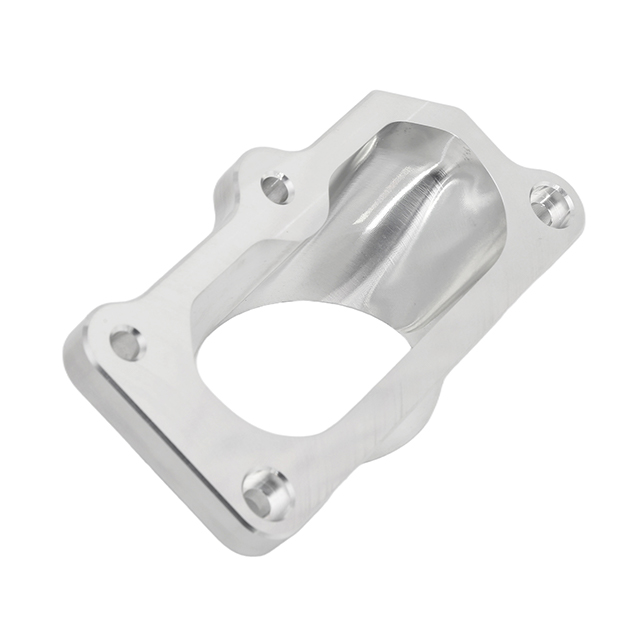
Aluminum 6061-T6 serves as the industry baseline for drone frames and brackets. It offers an optimal balance of machinability, cost, and tensile strength. This alloy accepts surface treatments like anodizing exceptionally well, providing necessary corrosion resistance for outdoor flight operations. Aluminum 6061-T651 introduces stress-relieved properties. During the manufacturing of the raw billet, the material is stretched to relieve internal stresses. When you machine away large volumes of material from a standard billet, the remaining metal often relaxes and bends. The T651 temper prevents this warping during the machining of complex, thin-walled drone chassis, ensuring the final part remains perfectly flat. For high-stress applications requiring aerospace-grade yield strength, 7075-T6 is the preferred choice. It rivals the strength of some steels while maintaining a low weight, making it ideal for heavy-lift drone structural joints and high-impact landing gear.
Lightweight polymers play a specific role in UAV prototyping. Delrin (POM) provides low friction and high dimensional stability, making it excellent for custom gears or sliding mechanisms within payload deployment systems. PEEK handles extreme temperatures and offers exceptional mechanical strength. Engineers often specify PEEK near high-output motors where heat degrades standard plastics. Polycarbonate delivers high impact resistance for protective covers and sensor shields. These engineering plastics also provide RF transparency. Telemetry modules, GPS units, and video transmitters require housings that do not block 2.4GHz or 5.8GHz radio frequencies. Machining these enclosures from polymers reduces overall weight without sacrificing durability or signal integrity.
Niche applications demand extreme material properties. Titanium (specifically Ti-6Al-4V) offers a superior strength-to-weight ratio and exceptional corrosion resistance. Engineers use it primarily for extreme stress joints or specialized payloads where aluminum might fail under fatigue. Carbon fiber composites provide unmatched stiffness and weight savings for structural plates and booms. However, you must evaluate the trade-offs. Machining titanium involves higher tooling costs and slower machining speeds due to its hardness and heat retention. Machining carbon fiber requires specialized vendor setups, including advanced dust extraction systems and specialized diamond-coated tooling to prevent delamination. These factors significantly increase prototype lead times and costs.
Drone Material Comparison Guide
| Material | Primary Drone Application | Machinability | Key Advantage |
|---|---|---|---|
| Aluminum 6061-T651 | Frames, chassis, brackets | High | Stress-relieved, resists warping |
| Aluminum 7075-T6 | High-stress joints, landing gear | Medium | Aerospace-grade yield strength |
| Delrin (POM) | Gears, sliding mechanisms | High | Low friction, high stability |
| PEEK | Motor insulators, RF housings | Medium | High heat resistance, RF transparent |
| Titanium (Ti-6Al-4V) | Critical fasteners, payload mounts | Low | Extreme strength-to-weight ratio |
Engineering teams must choose the right manufacturing partner to maintain rapid development cycles. Traditional machine shops often rely on manual quoting processes, which can take days, delaying urgent prototype iterations. Modern online CNC machining services offer instant quoting algorithms. Engineers upload a STEP file and receive pricing and lead times immediately. Furthermore, these platforms provide automated DFM analysis, highlighting problematic geometries before the part hits the shop floor. Streamlined communication portals centralize revision histories, material certifications, and inspection reports, providing exceptional engineering support and vastly improving workflow efficiency compared to traditional email-based ordering.
Defining required tolerances directly impacts assembly friction, motor alignment, and flight stability. A standard tolerance of +/- 0.005 inches is sufficient for general frame components and non-mating surfaces. However, bearing press-fits for gimbal motors or rotor shafts require precision tolerances of +/- 0.001 inches or tighter. If a motor mount is machined out of tolerance, the resulting vibration will degrade optical sensor data and reduce motor lifespan. Compliance and verification are mandatory. Engineers must require First Article Inspection (FAI) reports. Additionally, Material Test Reports (MTRs) verify that the prototype materials exactly match the requested production specifications, ensuring no substitute alloys compromise flight testing.
Sourcing decisions require analyzing the trade-offs between domestic vendors and offshore hubs. Domestic manufacturers typically offer faster shipping, easier communication, and stronger Intellectual Property (IP) security, which is critical during the sensitive R&D phase of a new commercial drone. However, domestic labor rates increase prototype costs. Offshore manufacturing often provides lower per-part costs, which benefits budget-constrained projects. Engineers must balance these lower costs against the risks of extended shipping lead times, potential communication barriers regarding complex DFM issues, and the challenge of enforcing NDAs across international borders.
A vendor's infrastructure must support the transition from single-unit prototyping to low-volume bridge production. Once a drone design passes flight testing, the engineering team needs 100 to 500 units for beta testing or initial market release. Switching vendors at this stage introduces massive supply chain risk, requiring new FAI reports and potential quality variations. Assess a vendor's capacity to scale operations seamlessly. This scalability requirement mirrors the demands seen in precision CNC machining services for automotive parts, where the ability to scale from a single functional prototype to batch production without changing vendors ensures consistent quality and reduces time-to-market.
Analyzing the relationship between upfront setup costs and per-part pricing is essential at low prototype volumes. CNC machining requires CAM programming, machine setup, and custom workholding fixtures. For a single prototype, these fixed costs make the unit price high. However, as the volume increases to 10 or 20 units for a flight test batch, the setup costs amortize across the order, significantly dropping the per-part price. Engineering teams must evaluate whether ordering a slightly larger batch initially provides better overall value than ordering single units sequentially.
The financial impact of over-tolerancing non-critical features cannot be overstated. Applying a blanket +/- 0.001-inch tolerance across an entire drone frame drastically increases machining time. It forces the machinist to use slower feed rates, perform additional finishing passes, and conduct rigorous manual inspections on every dimension. Leaving non-critical aesthetic surfaces at standard tolerances preserves the R&D budget without compromising flight performance.
Expedited lead times directly impact overall R&D budgets during iterative testing phases. When a flight test reveals a structural flaw, the team needs a revised part immediately. Rush fees for 24-hour or 48-hour turnarounds can double the cost of the component. Teams must balance speed against budget. Planning testing schedules to accommodate standard 5-to-7-day lead times preserves capital, reserving expedited orders only for critical path blockers that halt the entire engineering team.
Engineering teams can implement several strategies to control prototyping costs:
Limit tight tolerances strictly to mating surfaces and bearing press-fits.
Standardize tapped hole sizes across the entire drone assembly to reduce tool changes.
Design parts that can be machined from standard stock material sizes to minimize raw material waste.
Avoid deep pockets that require specialized, long-reach tooling.
Overly complex CAD designs drive up machining time and introduce significant implementation risks. Drone chassis designs featuring deep, narrow pockets or extreme undercuts require expensive 5-axis setups or necessitate multiple manual workholding changes. Every time a part is flipped and re-fixtured, precision degrades slightly, and labor costs increase. Complex geometries also require specialized, long-reach tooling. These tools are prone to deflection and chatter, resulting in poor surface finishes and dimensional inaccuracies.
Applying actionable DFM best practices mitigates these risks. Standardize internal corner radii to match common end mills. A corner radius should ideally be larger than one-third of the pocket depth to allow for thicker, more rigid tools. Minimize deep pockets wherever possible to reduce tool wear and machining time. Avoid ultra-thin walls. While engineers want to reduce weight, walls thinner than 1.5mm in aluminum often warp during machining due to tool pressure and internal material stress release. Design ribbed structures instead of uniformly thin walls to maintain rigidity while saving weight.
Material shortages for specific aerospace-grade alloys present another supply chain risk. If a design strictly specifies a rare temper of aluminum or a specific grade of titanium, procurement delays can stall the prototyping phase for weeks. Mitigate this risk by partnering with CNC machining services that maintain deep, verifiable material inventories. Recommend vendors that offer transparent, software-driven lead-time tracking, allowing engineering teams to monitor material availability and production status in real-time. Designing with commonly stocked alloys like 6061-T651 for initial prototypes also bypasses material sourcing bottlenecks.
Subtractive manufacturing eliminates the isotropic weaknesses of 3D printing, providing engineering teams with physical hardware that accurately reflects final production performance. By utilizing aerospace-grade alloys and engineering plastics, development teams can confidently validate structural integrity, thermal management, and aerodynamic stability. Engineering teams should prioritize vendors that offer automated DFM feedback, provide certified aerospace materials, and demonstrate proven capabilities in scaling from prototype to production while protecting IP.
Submit your current CAD files to an online CNC platform for a comprehensive DFM review.
Request material certifications upfront to guarantee compliance with aerospace standards.
Initiate a low-volume pilot run of 1 to 10 units to validate the vendor’s dimensional accuracy and surface finish quality.
Review First Article Inspection (FAI) reports before authorizing larger beta-testing batches.
A: Standard lead times for machined drone prototypes range from 5 to 10 business days, depending on part complexity and material availability. Many online manufacturing platforms offer expedited services that can deliver parts in 24 to 48 hours for an additional rush fee.
A: Online CNC services are generally better for rapid prototyping due to instant quoting, automated DFM feedback, and streamlined communication. Traditional shops may be preferable if you require highly specialized, hands-on engineering consultation for extremely complex, one-off payload integrations.
A: Aluminum 6061 is the standard for drone frames. The T6 temper offers high strength, while T651 is stress-relieved through stretching. Using 6061-T651 prevents the material from warping during the machining process, making it ideal for complex, thin-walled drone chassis.
A: CNC machining provides isotropic strength, superior thermal conductivity, and exact production-grade material properties. 3D printing is faster for initial form-and-fit checks but lacks the structural integrity and layer adhesion required for rigorous, real-world functional flight testing.
A: Yes. Professional CNC machining can routinely hold tolerances of +/- 0.005 inches, and precision setups can achieve +/- 0.001 inches or tighter. This precision is essential for bearing press-fits, motor alignment, and eliminating vibration in camera gimbals.
A: Reduce costs by applying DFM best practices: standardize internal corner radii, avoid deep pockets, eliminate unnecessary tight tolerances on non-mating surfaces, and design parts that can be machined from standard stock sizes using 3-axis setups instead of complex 5-axis operations.
A: Reputable CNC machining services provide Material Test Reports (MTRs) and Certificates of Conformance (CoC) upon request. These documents verify the chemical composition and mechanical properties of the raw material, ensuring compliance with strict aerospace engineering standards.


