
English ![]()

No. 7, Tianyang 6th Road, Dongfang Community, Songgang Street, Bao'an District, Shenzhen, Guangdong, China(518100)


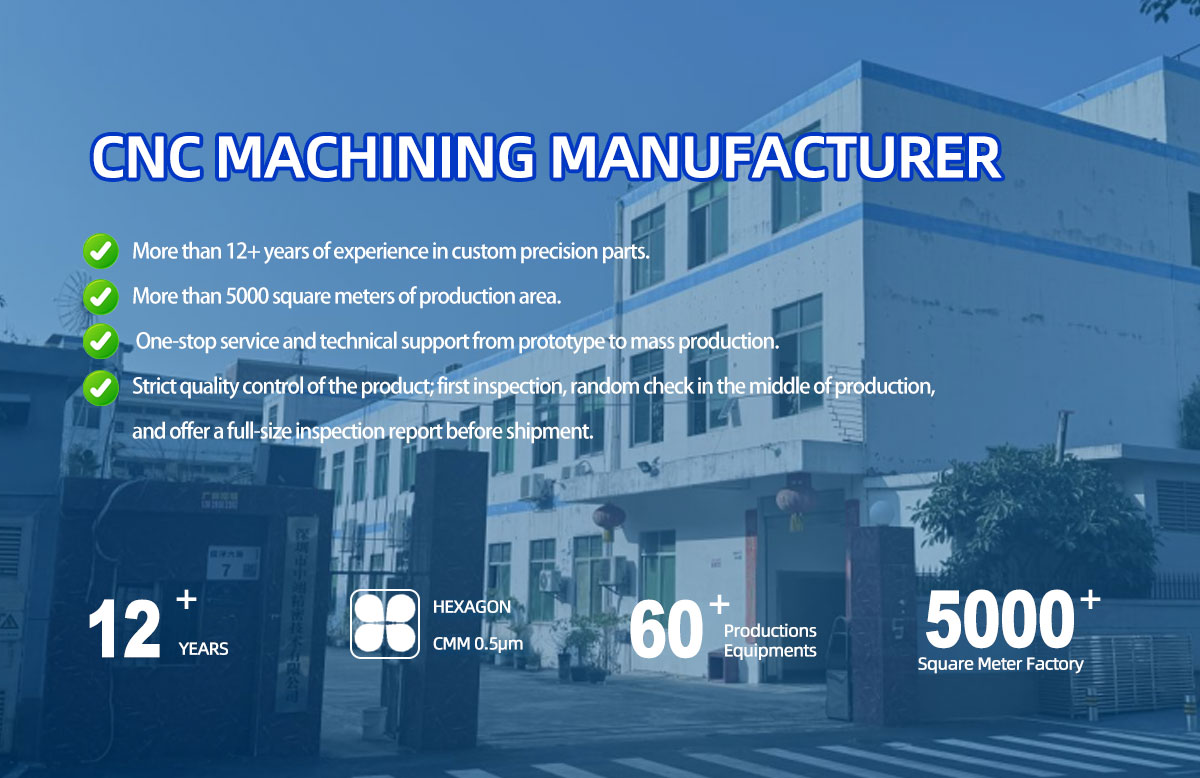
CNC milling is a foundational manufacturing process for medical device production, supporting the fabrication of components for surgical, diagnostic, orthopedic, and dental applications. Our facility provides precision CNC milling services for medical components, with 12+ years of custom precision parts production experience and a 5000+ square meter production area. We offer end-to-end support from rapid prototyping to full-scale production, with structured quality control aligned to medical component requirements.
Specification Category | Details |
|---|---|
Processing Capabilities | CNC Milling, 5-Axis CNC Machining, CNC Turning, Welding, Bending, Stamping, Die Casting, Injection Molding |
Machining Tolerances | ±0.001mm - ±0.005mm |
Surface Roughness | Ra 0.2μm - Ra 3.2μm (Customizable) |
Available Materials | Titanium, Cobalt-Chrome alloys, Stainless Steel (e.g., 316LVM), PEEK, Medical-grade polymers, Aluminum, Copper, Brass, Iron, Acrylic, PE, PVC, ABS, POM, PTFE |
Surface Treatments | Polishing, Passivating, Clear/Color/Sandblast Anodized, Nickel/Chrome/Zinc plating, Surface Chamfering, Hardening and Tempering, Laser engraving, Sandblasting, Brushing |
Accepted File Formats | STEP, STP, CAD, PDF, DWG, DXF, or physical samples |
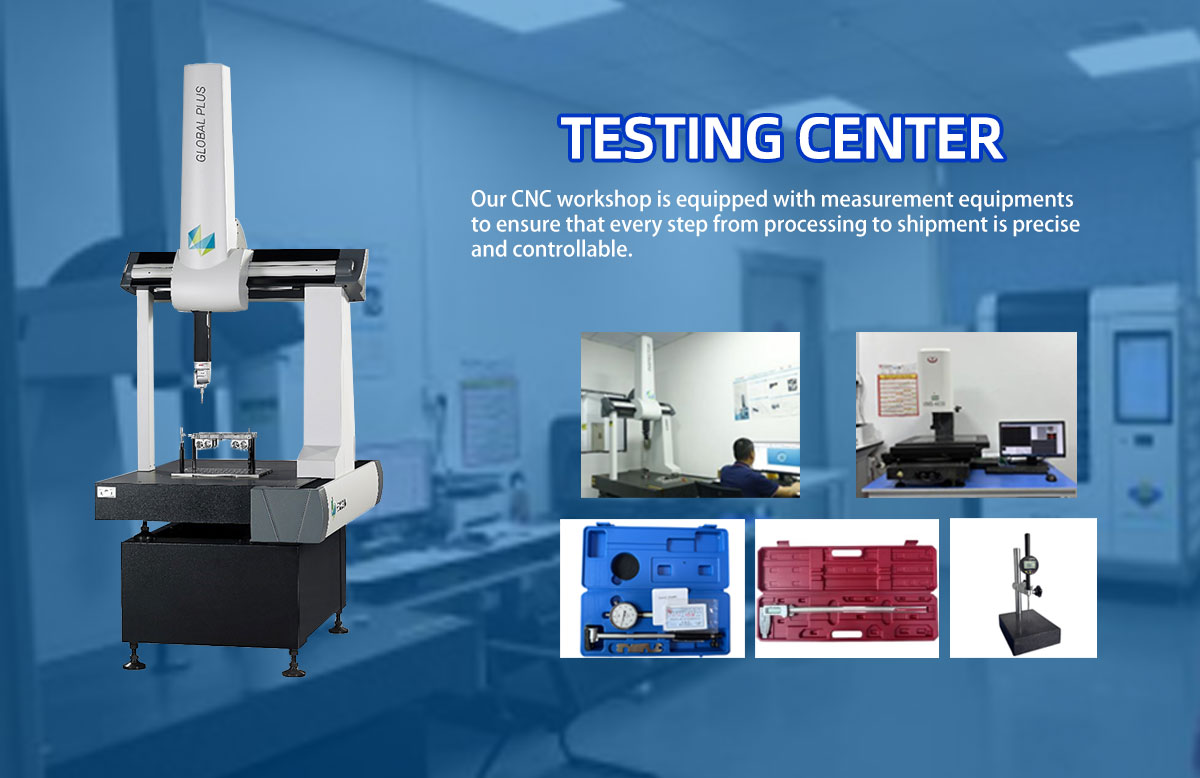
Quality Control & Testing | CMM, Optical Projector, Vernier Caliper, Automatic Height Gauge, Hardness Tester, Surface Roughness Tester, Run-out Instrument, Micrometer, Salt spray testing machine |
 | 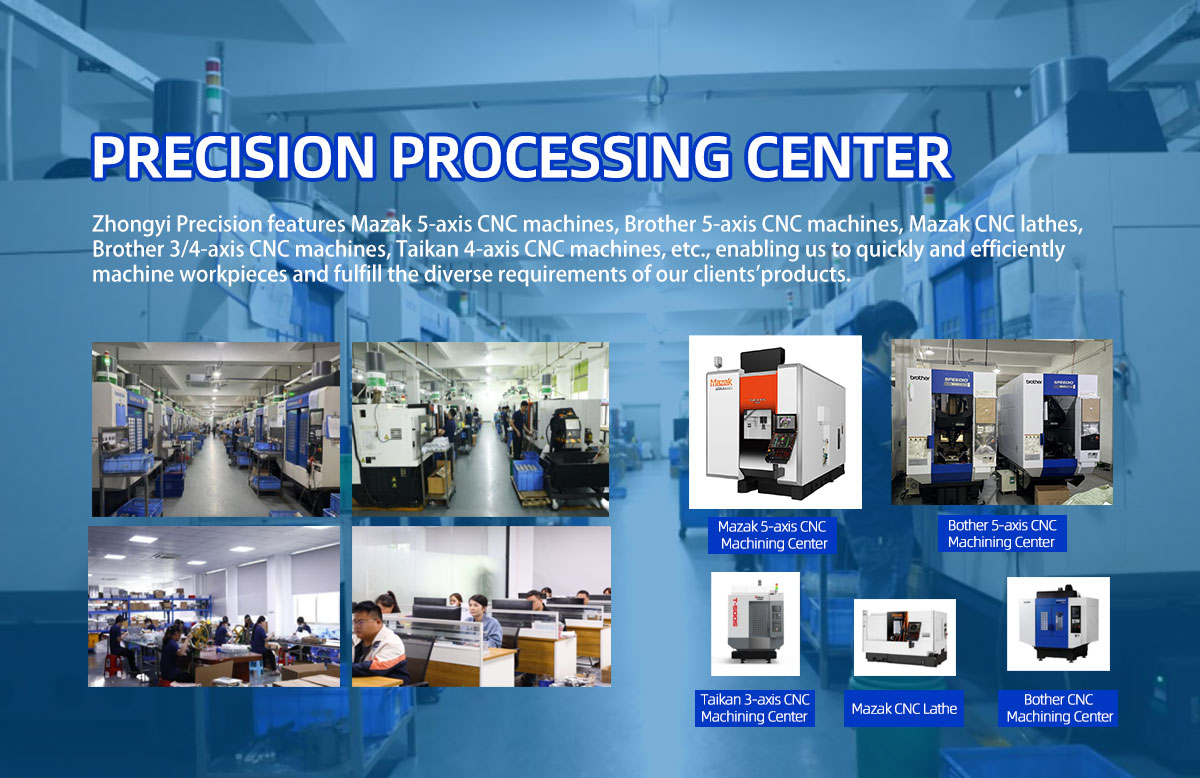 |  |
Our precision processing center is equipped with Mazak 5-axis CNC machines, Brother 5-axis CNC machines, Mazak CNC lathes, Brother 3/4-axis CNC machines, and Taikan 4-axis CNC machines. This equipment lineup supports efficient processing of workpieces with varying complexity and material types.
CNC milling supports production of hip and knee joint replacements, with precise bone-contact surfaces and articulation geometries. It also fabricates spinal implants with complex anatomical contours, and bone plates and screws made from high-strength biocompatible materials.
Precision-milled components include minimally invasive surgical tools with intricate internal channels for endoscopic procedures, dental drills and burs with micron-level cutting edges, and bone saws and reamers designed for consistent cutting performance.
The process produces critical parts for MRI and CT scanners with strict dimensional tolerances, ultrasound transducer housings with specified acoustic properties, and laboratory analyzer parts with chemical resistance properties.
CNC milling enables fabrication of crowns and bridges with precise occlusal surfaces, dental implant abutments with micron-level fit accuracy, and orthodontic appliances with patient-specific geometries.
Tolerances range from ±0.001mm to ±0.005mm for critical component fitment. Form accuracy is maintained within 0.01mm across production runs, and the process can produce micro-features as small as 0.1mm.
Surface finishes reach Ra 0.2μm without secondary polishing. Edges are processed to remove burrs, and surface texture can be adjusted to match osseointegration requirements for implant components.
We process a range of biocompatible materials, including titanium and cobalt-chrome alloys, PEEK and other medical-grade polymers, and 316LVM stainless steel for surgical instruments. Workflows are adjusted for material hardness and temperature sensitivity.
5-axis CNC milling creates anatomical contours for patient-matched implants, internal channels for fluid management, and undercut and thin-wall structures, all within specified dimensional tolerances.
All production stages follow documented processes to support material and process traceability. Production records are available to support FDA and CE approval procedures, along with required validation documentation.
We implement first article inspection, in-process random checks, and pre-shipment full-size inspection. Our climate-controlled testing lab is equipped with CMM, optical projectors, hardness testers, and surface roughness testers to verify component specifications. The standard workflow follows: inquiry and drawing submission, quotation confirmation, drawing review, sample production, sample confirmation, mass production, and final delivery. Technical support is available at each stage to address design or manufacturing questions.
Yes, we support low-volume production for prototype testing and clinical trial use, in addition to full-scale mass production. Order quantities can be adjusted based on your project stage.
We source medical-grade materials from certified suppliers, and can provide corresponding material certification documents upon request to support your regulatory approval processes.
Rapid prototyping services are available, with typical turnaround adjusted based on component complexity and material type. Specific timelines are provided upon review of your design drawings.
For medical device component manufacturing projects, you may submit your design files for a manufacturability assessment and detailed quotation. Our technical team works with your engineering team to optimize designs for production while maintaining clinical functional requirements.


