
English ![]()

No. 7, Tianyang 6th Road, Dongfang Community, Songgang Street, Bao'an District, Shenzhen, Guangdong, China(518100)
Views: 128 Author: Site Editor Publish Time: 2026-06-24 Origin: Site
In custom manufacturing services, material selection is not just a technical detail. It strictly dictates overall project return on investment, product lifespan, and long-term scalability. Every single choice creates a ripple effect down your production line. Over-engineering drives up unnecessary costs and wastes raw resources. Conversely, under-engineering leads to premature failure, warranty claims, and strict non-compliance penalties. You need a reliable strategy to balance these extremes.
We designed this comprehensive metal fabrication materials guide to assist procurement managers and engineers. You will learn how to evaluate various alloy options effectively. We will show you how to align specific metals with your exact project requirements. Finally, you will discover actionable ways to mitigate supply chain risks. Proper material choices streamline production, reduce waste, and ensure reliable performance across all your critical applications.
Material selection must balance yield strength, environmental resistance, and machinability against budget constraints.
High-performance metals like stainless steel offer long-term durability but require specialized tooling and longer lead times compared to carbon steel or aluminum.
Specific applications dictate material needs; for example, custom sheet metal bending parts for robotics require a precise strength-to-weight ratio, favoring specific aluminum alloys.
Partnering with an experienced custom sheet metal fabrication service early in the design phase prevents costly redesigns and manufacturability bottlenecks.
Engineers often default to familiar materials they have used for years. They skip evaluating current market availability or secondary processing requirements. This habit creates downstream problems, especially when material shortages occur or complex geometries fail on the shop floor. We recommend using a strict evaluation framework before requesting quotes. This prevents budget overruns and unexpected production delays.
You must evaluate materials across several critical dimensions. First, consider the mechanical and environmental requirements deeply. Ask yourself what exact yield strength you need to prevent permanent deformation under load. Evaluate necessary corrosion resistance, thermal tolerance, and impact resistance. A material must survive its intended environment without degrading over time. If the part operates outdoors, it faces UV exposure and moisture. If it sits inside an engine bay, it faces intense heat and continuous vibration.
Second, focus heavily on manufacturability. How easily can we cut, bend, or weld it? Think about structural integrity during these processes. For instance, you must account for springback rates in sheet metal bending. Springback happens when a metal tries to return to its original flat shape after bending. High strength often reduces formability and increases springback unpredictability. You must balance these competing factors. A metal with incredibly high tensile strength might tear completely if bent on a sharp radius.
Always establish a baseline requirement matrix early. Do this before you send CAD files to a vendor. List your non-negotiable performance metrics. Identify where you have design flexibility. Can you accept a slightly heavier part if the material requires less secondary machining? This matrix ensures you choose a material suited for practical reality, not just theoretical performance.
Tip: Always account for secondary processing when evaluating a material, including post-fabrication treatments like powder coating or galvanizing. A cheaper raw material like mild steel often requires extensive protective finishes to survive harsh environments, whereas inherently resistant materials bypass this step entirely.
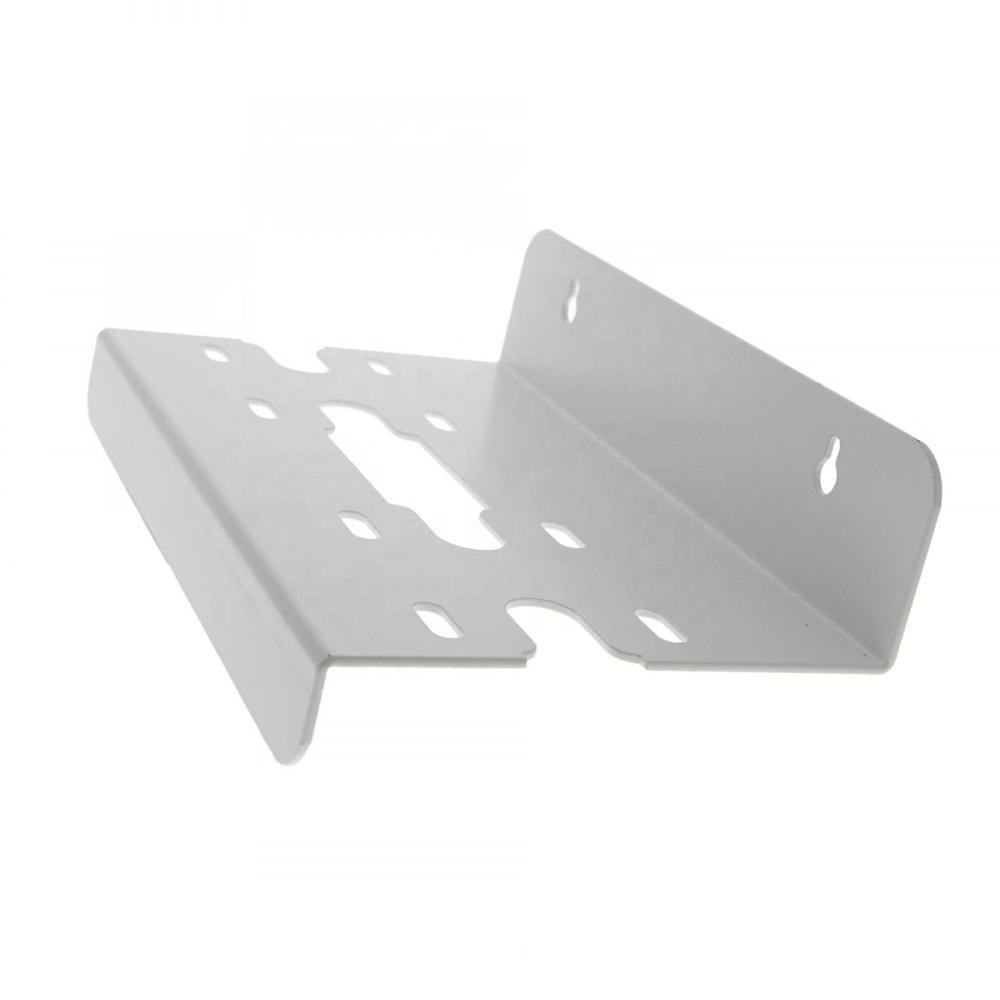
Different metals behave uniquely under mechanical stress and thermal loads. We must rigorously analyze the core materials dominating the manufacturing industry. This comparative analysis helps you match the right alloy to your specific application.
Carbon steel remains a highly prevalent staple in the industry. It delivers excellent tensile strength and structural rigidity. It is highly weldable, meaning fabricators can easily join complex assemblies. However, it carries significant limitations. Carbon steel is highly vulnerable to oxidation and rust. You must apply secondary finishing, such as powder coating, galvanizing, or liquid painting, for outdoor or corrosive environments. We frequently recommend carbon steel variants for heavy structural frames, large industrial machinery, and heavy-duty mounting brackets. When raw strength matters more than weight, carbon steel is an excellent starting point.
Stainless steel offers inherent corrosion resistance due to its distinct chromium content. It features excellent hygienic properties and visual aesthetic appeal without needing any secondary finishing. Its major limitation is a considerably higher raw material cost. Furthermore, austenitic stainless steel work-hardens quickly during machining. This rapid hardening increases tool wear and extends machining time, driving up labor costs.
It excels in medical devices, food and beverage processing equipment, and marine applications. When specifying stainless steel, you must distinguish between the 304 and 316 grades. The standard 304 grade works exceptionally well for general use and commercial kitchen equipment. Marine-grade 316 contains added molybdenum. This crucial addition significantly increases resistance to chlorides and harsh industrial solvents but comes at a premium price. The 400 series, being ferritic or martensitic, offers magnetic properties and high hardness, making it suited for specialized tooling.
Aluminum provides an exceptional strength-to-weight ratio, making it indispensable for modern engineering. It is non-magnetic, naturally corrosion-resistant, and highly formable in certain tempers. On the downside, aluminum has a lower fatigue limit than steel. It will eventually fail under repeated cyclic loading over decades. It also requires highly specialized TIG welding techniques, as it dissipates heat very rapidly.
You will find aluminum best suited for aerospace components, automotive structural parts, and electronic enclosures. The 5052 alloy is famous for its exceptional formability and weldability. The 6061 alloy, particularly in the T6 temper, offers superior structural strength but requires careful handling to prevent cracking during severe bending.
Copper and brass boast superior electrical and thermal conductivity. They offer unique spark resistance, making them safe in explosive environments. They also provide specific acoustic properties utilized in precision instruments. However, they are expensive and relatively soft. They require meticulous handling during the fabrication process to prevent surface scratching and unintended deformation. They fit perfectly into electrical enclosures, complex heat exchangers, grounding plates, and specialized architectural elements where aesthetics are paramount.
| Material Category | Primary Advantage | Key Limitation | Ideal Industry Applications |
|---|---|---|---|
| Carbon Steel | High tensile strength & cost-effective | Prone to oxidation (requires finish) | Structural frames, heavy machinery |
| Stainless Steel | High corrosion resistance & hygienic | Work-hardens quickly, higher cost | Medical devices, food processing |
| Aluminum | High strength-to-weight ratio | Lower fatigue limit than steel | Aerospace, electronic enclosures |
| Copper/Brass | Superior electrical/thermal conductivity | Expensive and relatively soft | Heat exchangers, electrical components |
Precision custom metal fabrication ensures optimal performance across diverse industrial applications.
Different industries face distinct operational challenges and strict regulatory environments. Material selection must adapt to these unique high-stakes environments perfectly.
Robotics require low inertia and exceptionally high stiffness. Actuators, stepper motors, and robotic arms work constantly, performing rapid start-and-stop motions. Heavy materials strain these mechanical components, increase energy consumption, and reduce overall operational efficiency. This is exactly why engineers heavily prefer specific aluminum alloys. They use them extensively to design custom sheet metal bending parts for robotics. Aluminum grades like 5052 and 6061 maximize actuator efficiency. They keep the moving assembly light while maintaining the necessary rigidity to ensure pinpoint positional accuracy.
Medical equipment faces intense regulatory scrutiny. Strict compliance standards from organizations like the FDA and ISO dictate exact material usage. You simply cannot use porous, reactive, or easily corroded metals in a surgical or cleanroom setting. These pristine environments mandate the use of 316L stainless steel. The "L" stands for low carbon, which improves weldability and prevents carbide precipitation. This specific alloy strongly resists harsh sterilization chemicals and bleaches. It easily withstands frequent high-temperature autoclave cycles without degrading, pitting, or rusting.
Infrastructure demands pure brute strength and massive durability. Projects in this sector require immense load-bearing capabilities over a span of decades. Carbon steel variants deliver this performance reliably and consistently. They also help keep large-scale projects within strict budgetary constraints. You can hot-dip galvanize or industrial powder-coat carbon steel to protect it entirely outdoors. This makes it an ideal, highly budget-friendly choice for heavy structural demands, crane components, and massive industrial platforms.
Your material might look absolutely perfect on a CAD model. However, it must survive the actual physical manufacturing process. Different fabrication techniques interact very differently with specific metals. Understanding these interactions prevents costly shop-floor failures.
You must respect a material's minimum bend radii. Ignoring this fundamental rule leads to severe material cracking and immediate part failure. The K-factor and bend deductions change drastically between alloys. For example, 5052 aluminum forms quite easily around a press brake die. It flows nicely without tearing. In sharp contrast, 6061-T6 aluminum possesses high yield strength and often cracks during severe bending. You must anneal it first or use an appropriately large inner radius to prevent structural damage.
Tip: If your design requires complex or tight-radius bends, prioritize highly formable alloys like 5052 Aluminum or 304 Stainless Steel to prevent micro-fracturing at the stress points.
Metals react wildly differently to extreme localized heat. Carbon steel is highly forgiving for welders. It welds fast, penetrates deeply, and yields strong joints easily using standard MIG processes. Aluminum behaves much differently. It has high thermal conductivity, meaning it dissipates heat rapidly away from the weld pool. It requires strict thermal control and specialized AC TIG welding machines. Poor welding techniques on aluminum cause severe warping, burn-through, and unacceptable structural distortion. Stainless steel also requires careful heat management to prevent oxidation on the back of the weld due to its low thermal conductivity.
Modern sheet metal cutting requires the right equipment setup. Reflective materials like copper, brass, and even highly polished aluminum bounce traditional CO2 laser beams right back into the lens. This severely damages the cutting equipment. To process these materials efficiently, fabricators must utilize advanced fiber lasers. Fiber lasers operate at a different wavelength that cuts through reflective metals with extreme precision. This technical requirement may severely limit your vendor choices. Always verify machine compatibility and laser wattage before finalizing a high-volume production order.
The absolute best material choice will fail entirely in the wrong hands. Your project's success depends heavily on your vendor's shop-floor capabilities. A poorly equipped partner cannot execute complex designs accurately, no matter how good the raw material is.
You must assess project implementation risks carefully. A top-tier custom sheet metal fabrication service minimizes these risks substantially. They must possess the specific tooling, necessary industry certifications, and rigorous quality control processes required for your chosen material.
We strongly suggest using specific, uncompromising vendor evaluation criteria:
Technical Capability: Do they possess modern high-wattage fiber lasers and multi-axis CNC press brakes suitable for your chosen material? Check their equipment list and ask about their maximum tonnage capabilities.
Compliance & Traceability: Can they provide detailed material test reports (MTRs) tracing the metal back to the mill? Ensure they hold relevant ISO certifications to guarantee process repeatability and strict material traceability.
Value Engineering: Will they proactively suggest beneficial material substitutions? A great manufacturing partner might swap a high-cost custom extrusion for a cleverly folded sheet metal assembly. This proactive engineering reduces your unit costs significantly without sacrificing any structural performance.
Note: A credible fabrication partner will rarely accept a complex RFQ without first running a Design for Manufacturability (DFM) review to ensure your chosen material aligns with real-world production tolerances.
Successful manufacturing relies entirely on intelligent alignment. You must rigorously align material properties with end-use performance demands and actual shop-floor manufacturing realities. Skipping this critical step leads to massive material waste, frequent production delays, and frustrating redesigns.
You should always evaluate materials holistically. Look far beyond just the initial per-pound raw material pricing. Factor in the material's formability, necessary secondary finishing processes, logistical weight constraints, and long-term environmental durability. A slightly more expensive alloy might eliminate three secondary machining steps, effectively optimizing your entire production budget.
We strongly encourage you to consult directly with an engineering-led custom metal fabrication partner early in your design phase. They will audit your current CAD designs effectively. They can validate your material selections before large-scale production starts. This proactive, collaborative approach saves valuable time, mitigates supply chain friction, and significantly improves the final structural quality of your product.
A: Steel is generally cheaper by weight and raw cost. However, aluminum is much lighter and naturally resists corrosion. This eliminates the need for expensive secondary finishing like powder coating. In logistics and weight-sensitive application scenarios, aluminum's lack of required finishing can easily offset its higher initial price.
A: Yes, but it carries significant risks. Different materials have vastly different springback rates, bend deductions, and kerf widths. Switching materials means your tooling and CAD models will likely require complete recalibration. This delays production and increases engineering costs significantly.
A: We typically recommend 5052 or 6061 aluminum. These alloys provide an exceptional strength-to-weight ratio. They reduce unnecessary strain on servo motors and actuators. At the same time, they maintain the precise structural rigidity required for dynamic automated movements without adding excess inertia.


