
English ![]()

No. 7, Tianyang 6th Road, Dongfang Community, Songgang Street, Bao'an District, Shenzhen, Guangdong, China(518100)
Views: 174 Author: Site Editor Publish Time: 2026-06-08 Origin: Site
Procurement teams often treat "welding" and "fabrication" as interchangeable terms. You see this mistake frequently in inaccurate requests for quotes. It quickly leads to severe budget miscalculations and unexpected supply chain bottlenecks. We must clarify the foundational reality to prevent these costly errors. Welding is a highly specific joining process. In contrast, custom metal fabrication represents an end-to-end manufacturing cycle. This broader production cycle often includes welding as just one step among many.
Technical buyers and engineers need a clear evaluation framework. You must determine exactly which service scope aligns best with your specific goals. Your project complexity, production volume, and industry compliance requirements will dictate this choice. We will break down these technical distinctions. You will learn how to confidently evaluate vendors. This ensures you select the right manufacturing partner to meet your exact specifications without overspending.
Scope Distinction: Welding fuses two pieces of metal together; custom metal fabrication encompasses design, cutting, bending, assembling, and finishing a complete product from raw materials.
Cost & ROI: Hiring a standalone welder is cost-effective for localized repairs or simple joining, but full-scale custom manufacturing services reduce unit costs for complex, multi-step production.
Vendor Consolidation: Partnering with a comprehensive custom sheet metal fabrication service eliminates the need to manage multiple subcontractors, lowering risk and lead times.
Compliance: Highly regulated industries require specialized fabrication capabilities (e.g., aerospace sheet metal stamping parts) that go far beyond standard structural welding certifications.
You must first define the technical boundaries of each discipline. Welding relies on a specific thermodynamic process. It fuses materials using precise applications of heat, pressure, and filler metals. Common methods include TIG, MIG, and Stick welding. The welder focuses purely on melting base metals and creating a strong, permanent joint. They do not shape the raw material before it arrives at their station.
Fabrication operates on a much larger scale. We define custom metal fabrication as an overarching sequence of processes. It converts raw stock into finished assemblies. A fabrication shop handles everything from initial CAD blueprints to the final powder coating.
Asking which process is better is fundamentally flawed. It is like comparing a vehicle's engine to the complete car. The decision centers around your project boundaries rather than competing technologies. If you need a complete vehicle, you do not just buy an engine.
Quality standards also highlight this difference. Structural welding often requires specific American Welding Society (AWS) certifications. The welder must prove they can produce defect-free joints. Conversely, a full-scale fabrication facility must maintain broader quality management systems. They usually hold certifications like ISO 9001 or AS9100. These standards govern the entire production workflow, ensuring consistent quality from material receiving to final shipment.
The daily reality on the shop floor reveals distinct operational differences. The personnel, equipment, and required infrastructure vary significantly between a welding shop and a fabrication facility.
Welder: They maintain a micro-focus. Their expertise revolves around puddle control, joint penetration, and metallurgy. They understand how different alloys react to intense heat.
Fabricator: They maintain a macro-focus. Their expertise includes reading complex blueprints, executing flat-pattern layouts, and operating CNC machinery. They must strictly manage overall assembly tolerances.
Welding relies heavily on portable or stationary power supplies. Operators need specialized torches, grounding clamps, and shielding gases like argon. It requires focused ventilation and fire-safe enclosures.
Fabrication requires massive capital investments. Facilities house hydraulic press brakes, precision laser cutters, and heavy stamping presses. They also need automated finishing lines for deburring and painting.
| Feature | Standalone Welding | Custom Metal Fabrication |
|---|---|---|
| Input Materials | Pre-cut components, structural steel, pipe | Raw sheet metal, tube stock, metal billets |
| Primary Tools | TIG/MIG torches, electrodes, shielding gas | Press brakes, CNC lasers, stamping presses |
| Deliverables | Fused joints, repaired seams, reinforced brackets | Turnkey assemblies, finished enclosures, complex chassis |
| Typical Industry Applications | Construction field repairs, pipeline joining | Medical devices, aerospace components, automotive frames |
Best Practice: Always audit a vendor's internal layout. Check if they seamlessly integrate their welding stations into their broader fabrication flow. Poor internal logistics between the cutting and welding stages usually indicate higher risks of dimensional errors. Parts should move smoothly from the press brake to the welding table.
High-precision components produced through an integrated custom metal fabrication workflow.
Buyers often face specific business problems where full fabrication is unnecessary. You might already have existing, pre-cut components. You only need a professional to assemble them securely. Alternatively, you might require immediate on-site structural repairs. In these cases, hiring a standalone welding service makes perfect sense.
Heavy equipment repair and maintenance: Fixing a cracked excavator bucket requires portable welding gear, not a CNC laser.
Field-joining of structural steel: Construction teams need certified welders to connect I-beams directly on the job site.
Highly specialized pipe modifications: Refineries often need specialized TIG welders to modify existing pressurized pipelines safely.
The cost implications strongly favor standalone welding for these tasks. Independent welding shops generally carry lower overhead. They do not pay for massive press brakes or stamping machinery. They typically bill you hourly or by the completed joint. This pricing model makes them highly efficient for narrowly scoped, low-volume tasks. You pay only for the fusion process.
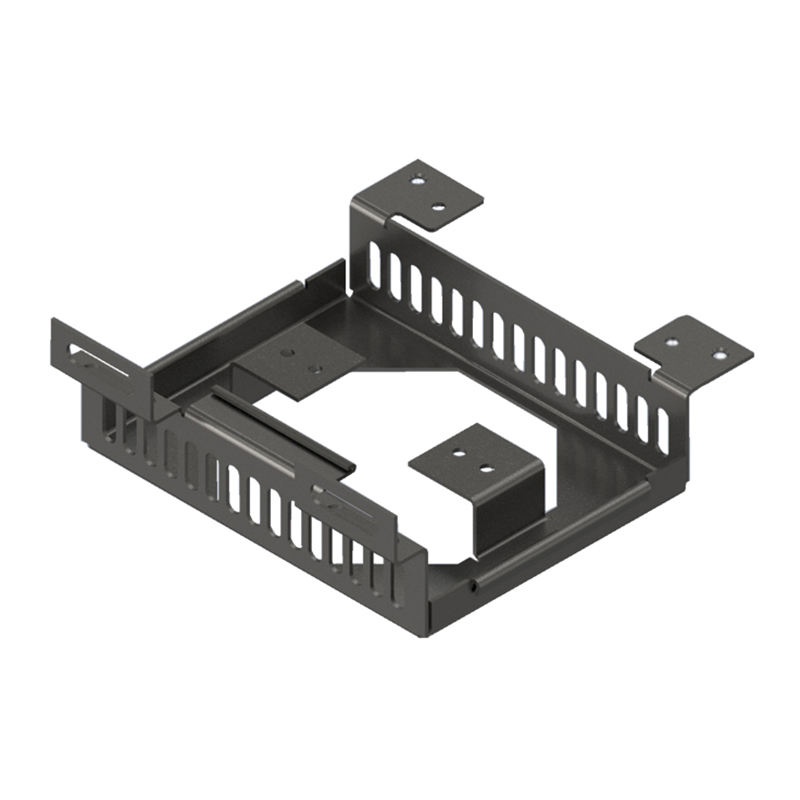
Your business problem changes entirely when launching a new product. You need a turnkey part created from a digital CAD file or raw material. The project requires multiple forming, cutting, and finishing steps before final assembly. A simple welder cannot help you here.
Developing enclosures and chassis: Creating server racks or electronic housings requires precision bending and hardware insertion.
Producing high-precision components: You might need specialized aerospace sheet metal stamping parts. These critical applications feature unforgiving tolerances.
Scaling production volumes: Transitioning from a single prototype to mid-volume or high-volume production requires automated machinery.
The true value lies in deep integration. A specialized custom sheet metal fabrication service handles everything under one roof. They manage material procurement, CAD-to-CAM translation, and laser cutting. They also execute the bending, precision welding, and final powder coating. You hand them a blueprint, and they hand you a finished, ready-to-sell product.
Expert Tip: For components requiring tight dimensional tolerances, prioritize fabrication partners offering in-house engineering support. Ask about their Design for Manufacturability (DFM) services. They can optimize your digital designs before any metal is ever cut. This prevents expensive redesigns later.
Understanding how these vendors price their services helps you allocate budgets effectively. Pricing drivers differ dramatically between the two disciplines.
Welding costs depend primarily on skilled labor rates. Consumable gases and filler metals also play a role. Furthermore, strict inspection requirements drive up the final bill. If your project requires X-ray testing or dye penetrant inspection, the cost per joint increases significantly.
Fabrication costs follow different rules. They are heavily influenced by machine setup times and tooling requirements. Material yield and scrap rates also dictate pricing. A smart fabricator optimizes nesting programs on their laser cutter. This reduces wasted material and directly lowers your unit price.
You must watch out for the hidden costs of segregation. Many buyers try to save money by hiring a machine shop to cut parts. They then hire a separate welding shop to assemble them. This creates massive financial risks. You face duplicate shipping costs. You also invite finger-pointing over tolerance stack-ups. If the welded assembly is out of spec, the welder blames the cutter, and the cutter blames the welder. This significantly delays your lead times.
You achieve superior long-term ROI by centralizing the work. Utilizing comprehensive custom manufacturing services reduces your overall expenditure. It provides repeatable quality, predictable lead times, and streamlined vendor management. You deal with one purchase order and one point of accountability.
Selecting the right vendor requires a strategic approach. You must first define your internal success criteria clearly. Does the project need simple, rugged structural integrity? Or does it require cosmetic perfection and tight dimensional control? Your answer filters out incompatible vendors immediately.
Do they hold the necessary certifications? Look for specific industry standards. Aerospace requires AS9100. Pressure vessels demand ASME stamps. Structural steel requires AWS certifications.
What is the ratio of their forming capabilities to their welding capabilities? A shop with ten welding bays but only one manual press brake is a welding shop, not a true fabricator.
Do they handle secondary operations in-house? Ask if they outsource machining, plating, or painting. In-house capabilities mean faster turnarounds and tighter quality control.
Risk Mitigation: Always request a First Article Inspection (FAI) report on prototype assemblies. You must review this detailed dimensional documentation before committing to volume production. It proves the vendor can actually meet your print tolerances.
Common Mistake: Buyers often forget to verify a fabricator's maximum physical handling capacity. If your project involves large-scale, heavy weldments, check their crane tonnage limits. Ensure their facility bay doors are large enough to ship the final assembly out.
We can clearly see that neither process is inherently better than the other. The specific needs of your project dictate the vendor profile you must seek. Standalone welding is the optimal choice for localized fusion, on-site modifications, and heavy repairs. Conversely, custom metal fabrication is your required path for end-to-end product realization. It transforms raw stock into complex, finished assemblies.
Your next step is to audit your current supply chain needs. Look closely at your existing procurement habits. If you currently manage multiple disjointed vendors for a single assembly, you carry unnecessary risk. We highly recommend migrating your complex projects to a unified fabrication partner. This strategic shift will eliminate logistics bottlenecks, improve quality consistency, and maximize your long-term financial returns.
A: Many standalone welding shops perform light fabrication tasks, such as cutting tubing with a band saw or drilling holes. However, they typically lack the heavy, expensive machinery needed for precision work. They do not have CNC laser cutters or hydraulic press brakes. For complex geometries, you need a dedicated fabricator.
A: Welding is a highly critical sub-process within the broader manufacturing industry. However, it is not a complete manufacturing cycle on its own. It serves as an assembly step. True manufacturing involves transforming raw materials into a finished, usable product through multiple distinct operations.
A: A CNC machine shop focuses on subtractive manufacturing. They carve precise parts out of solid metal billets using mills and lathes. A custom metal fabricator focuses on forming and joining. They bend, cut, and weld sheet metal and tube stock. Choose based on your raw material input.


