
English ![]()

No. 7, Tianyang 6th Road, Dongfang Community, Songgang Street, Bao'an District, Shenzhen, Guangdong, China(518100)
Views: 0 Author: Site Editor Publish Time: 2026-08-27 Origin: Site
Aerospace fuel systems operate under a zero-margin-for-error reality. A single nozzle failure directly compromises engine efficiency, threatens aircraft safety, and jeopardizes mission viability. Flow inconsistency simply cannot happen on the flight line. Engineers face a constant mechanical tension. They must achieve complex internal geometries for optimized fluid dynamics while maintaining micron-level tolerances across scalable production runs. Working with difficult-to-machine superalloys makes this even harder. Selecting a manufacturing partner requires looking past basic capability checklists. You must rigorously evaluate their custom CNC machining processes. Assess their quality management systems, system-level integration capabilities, and risk mitigation frameworks. We need to ensure absolute reliability from the first article to the final production batch.
Precision is Non-Negotiable: Aerospace fuel nozzles require 5-axis custom CNC machining to achieve the complex internal channels and micron-level tolerances necessary for precise fuel atomization.
Material Competency Dictates Success: A qualified partner must demonstrate proven expertise in machining high-temperature, high-strength superalloys (like Inconel and Titanium) while managing accelerated tool wear and thermal distortion.
System-Level Capability: Top-tier vendors do not just machine isolated nozzles; they possess the capability to manufacture mating critical aircraft parts, such as fuel valves and compressor housings, ensuring seamless assembly.
Compliance as a Baseline: AS9100 certification, full material traceability, and integrated Non-Destructive Testing (NDT) are mandatory evaluation filters, not optional value-adds.
Cross-Industry Maturity: Vendors with diverse high-precision portfolios often possess superior problem-solving frameworks, applying advanced automation and thermal management techniques across multiple demanding sectors.
Aerospace fuel nozzles endure brutal operational extremes. Combustion temperatures routinely exceed 1,500 degrees Celsius inside the turbine. Internal fluid pressures spike dramatically during acceleration phases, often surpassing 1,000 psi. The nozzle must deliver precise spray patterns under these exact conditions. Fuel atomization must remain perfectly consistent to ensure complete burn. Any deviation causes uneven combustion, leading to engine vibration, hot spots on turbine blades, and catastrophic failure risks. The success criteria for the machined part are incredibly strict. Surface finish requirements demand specific Ra values, often Ra 16 micro-inches or better for internal fluid pathways. Rough surfaces cause fluid turbulence, cavitation, and flow disruption. Dimensional stability under thermal stress is absolutely critical. The part must expand predictably without warping or binding against mating components. Absolute repeatability across production batches is mandatory to keep fleet maintenance predictable.
The aerospace industry is rapidly evolving, pushing these baselines even further. The transition to Sustainable Aviation Fuels (SAF) changes fluid dynamics entirely. Synthetic fuels possess different viscosities and flash points compared to traditional Jet-A. Advanced propulsion systems demand updated internal geometries to handle these new fluids. Engineers require stricter flow tolerances to maximize fuel efficiency and reduce emissions. Optimized weight-to-strength ratios are now standard requirements, forcing designers to thin out wall sections without sacrificing burst strength. Manufacturers must adapt to these next-generation aerospace innovations. Legacy nozzle designs simply cannot handle new synthetic fuel viscosities. Machining processes must evolve to meet these tighter engineering baselines, requiring stiffer machine tools and more advanced cutting strategies.
Standard 3-axis machining fails to meet modern aerospace requirements. The cutting tools cannot reach deep internal channels without colliding with the workpiece. Complex fluid pathways require compound angles that a 3-axis spindle simply cannot navigate. Operators must manually reposition the part multiple times to hit every feature. Every time a machinist unclamps and reclamps a part, they introduce setup error. These tiny deviations stack up, eventually pushing the final nozzle out of tolerance. Legacy casting methods also fall short for high-performance applications. Cast parts often suffer from internal porosity and microscopic voids. They leave rough internal surfaces that disrupt fuel flow and create stress risers. Secondary finishing processes attempt to fix these cast surfaces. However, manual deburring and polishing ruin tight geometric tolerances. Hand-working introduces unacceptable human error into the fluid pathway, making flow rates unpredictable from one nozzle to the next.
Legacy procurement models create specific pain points on the production floor. High scrap rates plague traditional manufacturing methods when dealing with exotic metals. Superalloys warp easily during aggressive milling if internal stresses are not managed properly. Inconsistent batch quality delays final engine assembly, leaving expensive turbine cores waiting on the floor. Prolonged lead times occur due to extensive secondary finishing requirements and rework loops. Engineers spend too much time inspecting parts and writing deviation reports. They reject components that fail stringent flow bench tests. Traditional methods simply lack the rigid process control needed for modern fuel injection systems.
Simultaneous 5-axis milling transforms nozzle production by eliminating multi-setup inaccuracies. The machine moves the cutting tool across the X, Y, and Z linear axes while simultaneously rotating the A and B (or C) rotary axes. This enables the production of complex, monolithic nozzle designs. The entire part is cut in a single setup from a solid block of material. This eliminates the need to move the part between different fixtures. Single setups drastically reduce tolerance stack-up errors, keeping true position tolerances within microns. The cutting tool maintains continuous, optimal engagement with the metal. The machine controller uses Tool Center Point Control (TCPC) to adjust the feed rate dynamically as the tool tilts. This produces superior surface finishes on complex curves and internal swirler vanes.
Swiss-style CNC turning plays a critical role in the micro-machining phases. It excels at cutting internal nozzle orifices and metering valves. Unlike conventional lathes, a Swiss machine feeds the bar stock through a guide bushing. The guide bushing supports the material exactly where the cutting tool engages it. This prevents tool deflection and material vibration during deep hole drilling. Machinists can achieve length-to-diameter ratios of 20:1 or more without the drill wandering off-center. Intricate threading on the nozzle body requires this exact stability to ensure leak-proof seals. Hybrid manufacturing approaches are also gaining ground on the shop floor. Engineers use Direct Metal Laser Sintering (DMLS) to 3D print near-net-shape nozzles with internal conformal cooling channels. Precision machining then finishes these additively manufactured parts. Printers cannot achieve the required surface finishes or bearing fits alone. Machining hits the tight tolerances that additive methods miss, blending the best of both technologies.
Aerospace alloys work-harden rapidly during cutting. The metal actually gets harder as the tool shears it, creating a glazed, impenetrable surface if the feed rate drops. This destroys standard cutting tools in minutes. High-pressure coolant systems are an absolute necessity. Through-Spindle Coolant (TSC) blasts cutting fluid directly out of the tool tip at pressures exceeding 1,000 psi. This clears chips instantly from deep internal cavities, preventing recutting. It breaks the vapor barrier that forms around the cutting zone, preventing thermal damage to both the tool and the workpiece. Custom carbide tooling cuts through these tough alloys. Variable helix end mills break up harmonic vibrations, eliminating chatter marks on the nozzle walls. Physical Vapor Deposition (PVD) coatings, like Titanium Aluminum Nitride (TiAlN), insulate the carbide substrate and extend tool life significantly.
Adaptive machining technologies keep production running smoothly during unmanned shifts. Spindle sensors provide real-time tool wear monitoring. The machine detects minute changes in cutting forces and spindle load. It triggers automated offset adjustments instantly. This maintains continuous precision without operator intervention. If a tool wears down by a few microns, the machine compensates on the next pass. If the load spikes dangerously, the machine halts and swaps to a redundant sister tool automatically. This guarantees that the first nozzle matches the thousandth nozzle perfectly. It prevents expensive scrap when machining costly superalloy billets and keeps the spindle turning around the clock.
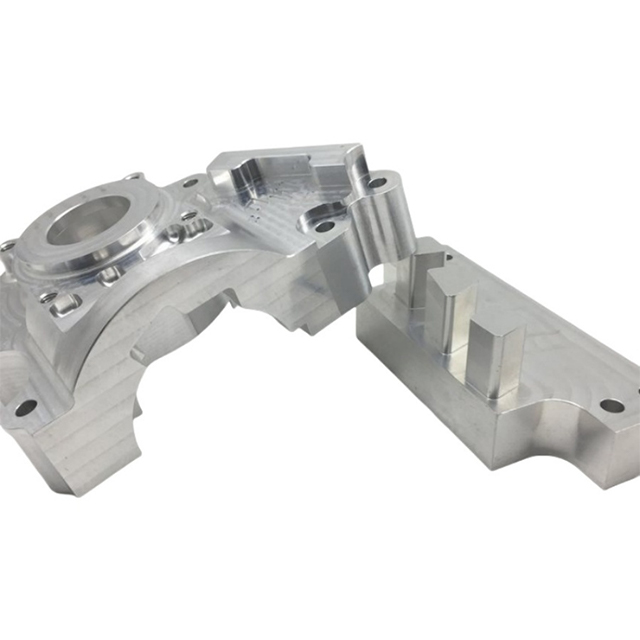
You must evaluate a vendor's specific material capabilities before awarding a contract. Aerospace fuel nozzles rely on exotic metals that behave unpredictably under a cutting tool. Inconel 718 offers incredible high-temperature strength but generates immense heat at the cutting edge, often welding chips back onto the tool. Hastelloy resists severe oxidation and corrosion but requires extremely rigid workholding to prevent vibration. Titanium Grade 5 provides an exceptional strength-to-weight ratio but is highly susceptible to galling and chemical reactivity with cutting fluids. Procurement teams must ask hard questions about shop floor practices. Investigate the vendor's scrap mitigation strategies. Ask how they manage thermal distortion during long machining cycles. A competent vendor will explain their specific feed and speed formulas, trochoidal milling paths, and chip-thinning calculations for superalloys.
Aerospace Superalloy Machining Characteristics
| Material Grade | Primary Aerospace Application | Machinability Rating | Primary Machining Challenge | Required Tooling Strategy |
|---|---|---|---|---|
| Inconel 718 | Combustion zone nozzles | Very Low (approx. 12%) | Severe work hardening and heat generation | Ceramic inserts, high-pressure TSC, rigid setups |
| Titanium Grade 5 (Ti-6Al-4V) | Manifolds and structural mounts | Low (approx. 22%) | Galling, poor thermal conductivity | Sharp positive rake angles, high coolant concentration |
| Hastelloy X | High-temperature fluid pathways | Low (approx. 15%) | Gummy chip formation, built-up edge (BUE) | Aggressive feed rates to stay under the work-hardened zone |
| Stainless Steel 17-4 PH | Valve bodies and fittings | Moderate (approx. 45%) | Dimensional changes during post-machining heat treat | Machine to near-net, heat treat, then hard-mill to final size |
A robust quality infrastructure is non-negotiable for flight-critical hardware. In-process probing catches dimensional errors early, before the part comes off the machine. Spindle-mounted probes verify part alignment and establish work offsets before cutting begins. Coordinate Measuring Machines (CMM) verify final geometries in a temperature-controlled lab. They measure complex curves and true positions down to the micron using continuous scanning heads. Optical comparators and vision systems check micro-features like internal orifice diameters that physical probes cannot reach. Documentation requirements are incredibly strict in aerospace. Demand comprehensive First Article Inspection (FAI) reports compliant with AS9102 standards. Require material test reports (MTRs) for every batch of raw metal to verify chemical composition. Establish end-to-end traceability protocols so every finished nozzle links back to the original mill heat lot.
Secondary processing standards demand equal scrutiny during vendor evaluation. Evaluate the vendor's management of NADCAP-certified processes. Fuel nozzles often require chemical passivation to remove free iron and prevent corrosion. Heat treatment relieves internal stresses after aggressive machining, preventing the part from warping in service. Thermal barrier coatings protect the nozzle from direct combustion heat. The machining vendor must manage these outsourced processes flawlessly if they do not have them in-house. They must ensure secondary treatments do not alter the final machined tolerances. Masking procedures for coatings must be exact to keep threads and bearing surfaces clean.
Evaluating a vendor's broader manufacturing portfolio is highly revealing. It exposes their underlying engineering maturity and proves their operational stability across different economic cycles. Experience in custom CNC machining for automotive parts demonstrates high-volume scalability. Automotive production demands strict cost-control methodologies, rapid cycle times, and automated pallet-changing systems. A vendor applying these lean principles to aerospace saves you money. They understand how to optimize tool paths for maximum efficiency without sacrificing quality.
Expertise in custom CNC machining for new energy parts translates perfectly to aerospace fluid systems. Hydrogen fuel cells and advanced battery enclosures require novel materials and absolute leak-proof sealing surfaces. They demand intense thermal management during production to prevent warping of thin-walled enclosures. This experience proves a vendor can handle next-generation aerospace challenges and tight sealing requirements. Furthermore, a background in custom CNC machining for robotic parts indicates high mechanical proficiency. Robotic joints require zero-backlash tolerances and perfect concentricity. They involve complex kinematic requirements and lightweighting strategies. Vendors who master robotics easily handle the tight geometric dimensioning and tolerancing (GD&T) required for fuel nozzles.
Over-specifying tolerances creates an exponential cost curve on the shop floor. Demanding a +/- 0.0001-inch tolerance on a non-critical external surface wastes money and machine time. It forces the machinist to slow down feed rates, take multiple spring passes, and constantly adjust tool wear offsets. It requires excessive inspection time in the CMM lab. Implement a Design for Manufacturability (DFM) collaboration early in the engineering phase. A strategic CNC partner helps engineers relax non-critical tolerances. They identify areas where a standard +/- 0.005-inch tolerance suffices for clearance features. This reduces cycle times drastically. It lowers production costs without impacting fuel nozzle performance or assembly fitment.
Strategic Manufacturing Trade-Off Analysis
| Manufacturing Approach | Initial Machining Cost | Structural Integrity | Assembly Risk Factor | Ideal Application |
|---|---|---|---|---|
| Monolithic Solid Billet | High (Longer cycle times, high material waste) | Superior (No weak joints or heat-affected zones) | Zero (No mating parts to align) | High-pressure combustion zones, primary atomizers |
| Multi-Part Assembly | Low (Faster individual cuts, standard 3-axis viable) | Moderate (Relies on welds, brazing, or O-rings) | High (Potential for fluid leaks and vibration failure) | Low-pressure manifold sections, external brackets |
Engineers must evaluate structural trade-offs carefully when designing fluid systems. Machining a single, complex fuel nozzle from a solid billet is expensive. It requires advanced 5-axis machinery, extensive CAM programming, and generates a large amount of metal chips. However, it delivers superior structural integrity. There are no seams, brazed joints, or elastomer seals to fail under extreme pressure and heat. Conversely, machining multiple simpler components for later assembly lowers initial machining costs. Standard 3-axis machines and 2-axis lathes can handle simpler parts quickly. Yet, this approach introduces a high risk of assembly failure. Seals degrade over time. Welds introduce thermal stress and potential micro-cracking. For critical aerospace fuel systems, monolithic machining usually wins despite the higher upfront investment because it guarantees long-term reliability.
Evaluate the vendor's total manufacturing scope. Are they limited to isolated nozzle production, or do they possess system-level capabilities? The best vendors machine mating critical aircraft parts alongside the nozzles. They produce fuel injection valves, distribution manifolds, swirlers, and compressor housings. This reduces supply chain fragmentation and logistical headaches. Buying mating parts from a single vendor ensures perfect fitment. The vendor controls the tolerances for both the nozzle and the housing it threads into. They can perform test assemblies on their own floor. This eliminates finger-pointing between different machine shops if parts fail to assemble correctly on your factory floor.
Prototype bias is a dangerous trap in aerospace procurement. A vendor succeeds brilliantly on a low-volume run of five nozzles. Their best toolmaker handles the project manually, tweaking offsets and babying the machine. However, they fail entirely during full production. They cannot maintain the required Cpk (process capability index) across five hundred units. Machine thermal drift, tool wear, and operator fatigue ruin the batch. Mitigate this risk aggressively before issuing a blanket purchase order. Require detailed process capability studies during the pilot run. Mandate locked-down CNC programs. Forbid any manual tooling path adjustments or feed rate overrides post-First Article Inspection. The process must be stable enough to run unattended.
Steps to Mitigate Thermal Distortion in Superalloys:
Rough machine the billet to within 0.100 inches of final dimensions to remove bulk material stress.
Send the roughed part out for a stress-relief heat treatment cycle.
Perform semi-finishing passes to bring the part within 0.010 inches, utilizing high-pressure coolant to stabilize part temperature.
Allow the part to normalize to the shop's ambient temperature (typically 68 degrees Fahrenheit).
Execute the final finishing passes using fresh, sharp cutting tools to minimize cutting pressure and heat generation.
Raw material shortages constantly threaten aerospace schedules. Aerospace-grade superalloys require long lead times from mills, sometimes stretching to 40 weeks for specialized Inconel forgings. Relying heavily on third-party finishing services adds further delays. If a heat-treating subcontractor falls behind or a plater ruins a batch, your nozzles sit on a shelf. Address these vulnerabilities during vendor selection. Evaluate vendors based on their vertical integration. Look for established raw material supplier networks and blanket stocking agreements. Prioritize vendors with in-house secondary operation capabilities. A partner who handles machining, CMM inspection, passivation, and light assembly under one roof protects your production timeline from external shocks.
To secure a reliable supply chain for aerospace fuel nozzles and ensure zero-defect production, execute the following steps immediately:
Initiate a technical consultation with prospective vendors to review their specific superalloy feed, speed, and tooling strategies.
Request a comprehensive DFM review of your nozzle CAD files to identify and relax non-critical tolerances, reducing cycle times.
Schedule a physical facility audit to verify their 5-axis machine rigidity, CMM lab temperature controls, and AS9100 compliance.
Demand a documented process capability study (Cpk > 1.33) from a recent high-volume aerospace production run to prove process stability.
A: Aerospace fuel nozzles require micron-level precision. Advanced CNC machining centers routinely achieve tolerances of +/- 0.0001 inches. This extreme accuracy depends heavily on the specific material being cut and the complexity of the internal geometry. Rigid thermal management and in-process probing are required to maintain these tolerances across production batches.
A: Fuel nozzles feature complex internal fluid channels and compound angles designed to optimize atomization. 5-axis machining allows the cutting tool to approach the part from any angle. It machines the entire complex geometry in a single setup. This eliminates the tolerance stack-up errors that occur when moving parts between multiple 3-axis machines.
A: Aerospace fuel systems rely on high-temperature superalloys. Inconel 718 is widely used for its exceptional heat resistance. Titanium Grade 5 offers an optimal strength-to-weight ratio. Specific stainless steel grades (like 17-4 PH) are also common. These materials are chosen for their ability to withstand extreme combustion temperatures and resist fuel corrosion.
A: Vendors adhere to strict AS9100 standards. They utilize in-process spindle probing to verify part alignment before cutting. Final dimensions are verified using Coordinate Measuring Machines (CMM) and optical comparators. Furthermore, vendors maintain full material traceability, providing material test reports (MTRs) and comprehensive First Article Inspection (FAI) documentation.
A: Yes, cross-industry experience builds manufacturing maturity. The high-volume scalability required in automotive parts teaches strict cost-control and lean production. The tight kinematic tolerances required for robotics ensure a vendor understands zero-backlash precision. This diverse problem-solving experience directly enhances their ability to tackle complex aerospace challenges.
A: System-level machining capabilities reduce supply chain complexity. When one vendor machines both the fuel nozzle and its mating components (like valves or housings), they control the fitment tolerances for the entire assembly. This guarantees seamless integration, reduces assembly leaks, and eliminates compatibility issues between parts from different suppliers.
A: Lead times vary significantly based on material availability and part complexity. Prototyping may take 4 to 8 weeks. Full production runs often require 12 to 16 weeks, especially if aerospace-grade superalloys must be sourced from mills. Early Design for Manufacturability (DFM) reviews can help streamline tool paths and shorten overall lead times.


