English ![]()

No. 7, Tianyang 6th Road, Dongfang Community, Songgang Street, Bao'an District, Shenzhen, Guangdong, China(518100)


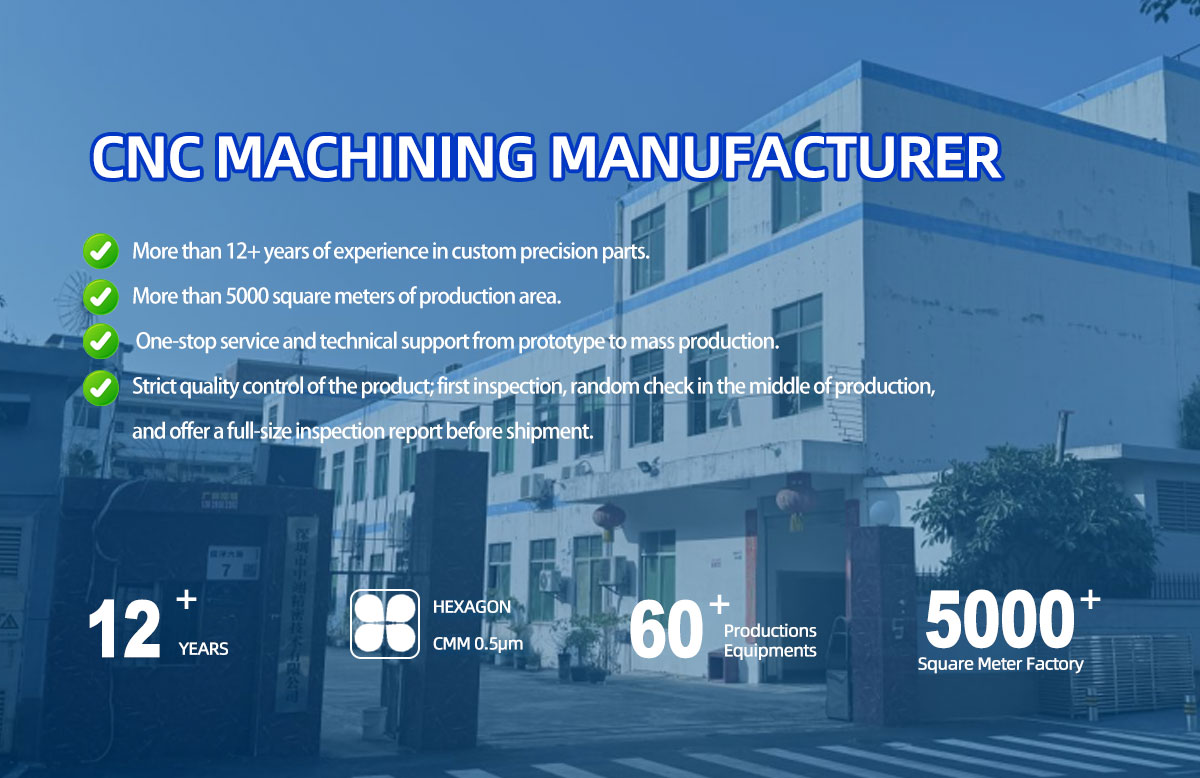
CNC milling serves as a core manufacturing process across the full spectrum of robot production, from internal transmission components to external structural frames. As humanoid and quadruped robot technologies advance, 5-axis CNC machining enables the production of complex components including precision gears, thin-walled reducer housings, and integrated joint assemblies. Zhongyi Precision operates with 12 years of experience in custom precision parts manufacturing, supported by a 5000+ square meter production facility. We provide end-to-end services from initial prototype development to volume production for commercial procurement teams in the robotics industry.
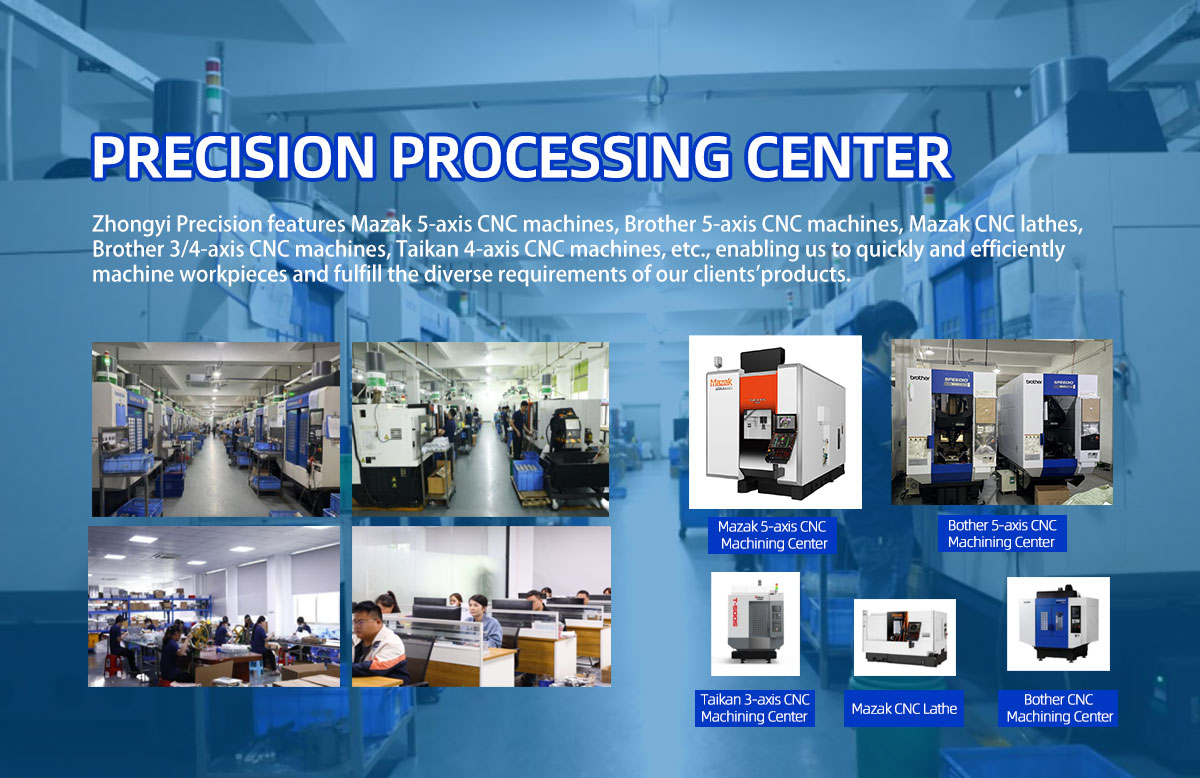
Equipment Type | Quantity |
Mazak 5-axis CNC Machining Centers | Multiple |
Brother 5-axis CNC Machining Centers | Multiple |
Mazak CNC Lathes | Multiple |
Brother 3/4-axis CNC Machining Centers | Multiple |
Taikan 4-axis CNC Machining Centers | Multiple |
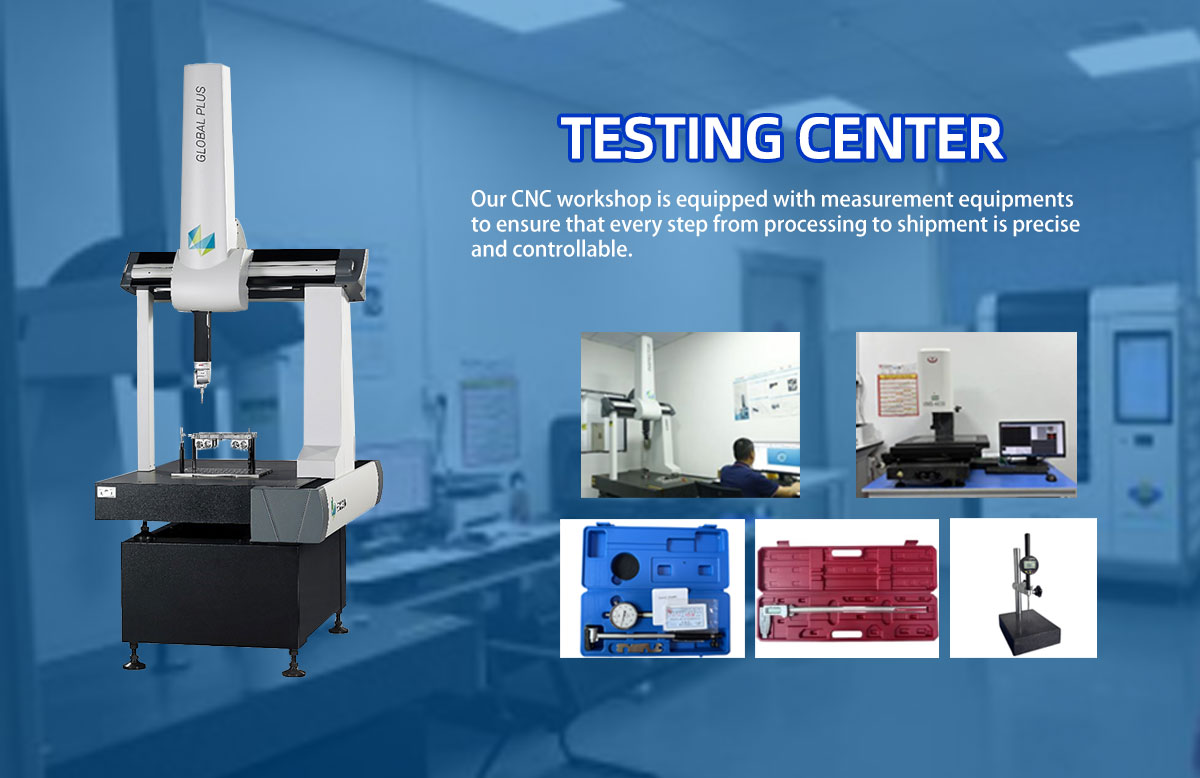
We implement a three-stage quality control system: first article inspection, in-process random checks, and pre-shipment full dimensional verification. Our measurement laboratory is equipped with HEXAGON CMM systems with 0.5m measurement capacity, enabling precise dimensional verification of all manufactured components.
We produce structural elements including precision-machined aluminum alloy frames for industrial robots, carbon fiber composite mounting plates for lightweight designs, and high-strength titanium joint housings for articulated arms.
Our machining capabilities extend to critical motion components such as harmonic drive parts with micron-level tolerances, precision gear systems for servo motors, and high-accuracy bearing housings for rotary joints.
We manufacture specialized end-effector parts including custom gripper mechanisms with complex geometries, force/torque sensor mounting interfaces, and tool-changing adapters for multi-function robotic systems.
We create precision-machined LiDAR housings, camera mounting brackets with optical alignment features, and tactile sensor arrays with micro-machined surfaces.
Parameter | Value |
Positioning Accuracy | ±0.002mm |
Geometric Tolerance | ≤0.005mm |
Surface Finish | Ra 0.2μm (without post-processing) |
Compatible Materials | Aircraft-grade aluminum (7075-T6), PEEK, UHMWPE, 17-4PH stainless steel, magnesium alloys |
Production Volume Range | 1 unit to mass production |
Our 5-axis CNC machining capabilities support rapid prototyping services with minimal tooling changes, enabling design iteration during product development cycles. We seamlessly transition from prototype production to volume manufacturing while maintaining consistent dimensional accuracy across all production batches. Precision-machined interfaces reduce assembly time for commercial users integrating components into their robotic systems.
We work with a range of materials including aircraft-grade aluminum alloys, high-performance plastics, stainless steels, titanium alloys, and magnesium alloys, selected based on specific application requirements.
Lead times vary based on part complexity, material, and production volume. Prototype orders typically ship within 7-10 business days, while volume production orders are scheduled based on mutually agreed timelines.
Yes, we provide comprehensive dimensional inspection reports with every shipment, documenting all critical measurements verified through our coordinate measuring equipment.
Our custom CNC machining services support robotics manufacturers across industrial, medical, and service applications. We accept custom parts with drawing submissions and provide technical support throughout the manufacturing process. Contact our team to discuss your specific robotics component requirements and receive a detailed quotation.