
English ![]()

No. 7, Tianyang 6th Road, Dongfang Community, Songgang Street, Bao'an District, Shenzhen, Guangdong, China(518100)
Views: 142 Author: Site Editor Publish Time: 2026-09-11 Origin: Site
For engineers and procurement teams, specifying a surface finish is a high-stakes balancing act. You must constantly weigh dimensional integrity against corrosion resistance and unit cost. A single miscalculation here can derail entire production runs. Unlike traditional plating or painting, a true blackening coating (often called black oxide) is a structural chemical conversion. It alters the surface of the metal itself. This happens without adding any measurable thickness to the geometric profile.
Understanding the precise steps of this blackening process is critical for your success. You need this knowledge for evaluating vendor competence and avoiding post-assembly corrosion failures. It also ensures your precision-machined components meet strict industry compliance standards. In the following sections, we will explore the exact five-step application method. You will learn how to differentiate between hot and cold oxidation techniques. We will also outline actionable strategies to audit your manufacturing partners effectively.
Blackening coating adds virtually zero thickness (typically less than 5 to 10 millionths of an inch), making it the optimal finish for tight-tolerance custom part machining.
The actual black oxide layer offers minimal corrosion resistance on its own; the critical protective barrier is the supplementary after-finish (oil, wax, or lacquer).
Evaluating a manufacturing partner requires differentiating between "hot" black oxide (a true structural conversion) and "cold" blackening (a softer copper-selenium cosmetic deposit).
Strict adherence to the cleaning and neutralizing steps determines whether a batch will suffer from premature "red rust" or white salt bleed-out.
Engineers face a constant struggle during product development. Standard surface treatments often solve one problem but create another. Zinc plating, anodizing, and powder coating provide excellent corrosion resistance. However, they introduce significant dimensional build-up. This extra material causes severe thread interference on tapped holes. It also leads to unwanted edge rounding on precision profiles. These physical changes can easily ruin high-tolerance components. You might spend thousands machining a precise part only to ruin it during finishing.
This is where chemical conversion shines. Because it acts as a structural conversion process rather than a deposited layer, it behaves differently. A blackening coating preserves the exact dimensions of your raw machined part. The chemical reaction transforms the top layer of iron into magnetite. It does not stack new material on top of the substrate. You keep your tight tolerances perfectly intact.
Certain applications demand this level of dimensional stability. Common use cases include tooling, gears, and sprockets. Optical equipment heavily relies on this finish for superior light absorption. Internal moving components also benefit greatly. The process minimizes galling between mating surfaces. You will see it used frequently in firearms, aerospace assemblies, and medical devices.
Modern production pairs this finish with high-end manufacturing. Many engineers bundle it directly with CNC machining services. When you utilize 5-Axis CNC machining to achieve micro-tolerances, conventional plating is risky. The same applies when using wire EDM machining for intricate internal profiles. Blackening ensures those costly, precise geometries remain mathematically unaltered. You get aesthetic and functional benefits without sacrificing mechanical accuracy.
Common Mistake: Many junior engineers assume all black finishes are identical. They specify standard zinc plating with a black chromate dye instead of true oxidation. This mistake leads to assembly failures when the added zinc thickness prevents gears from meshing properly. You must clearly differentiate between deposited platings and structural conversions.
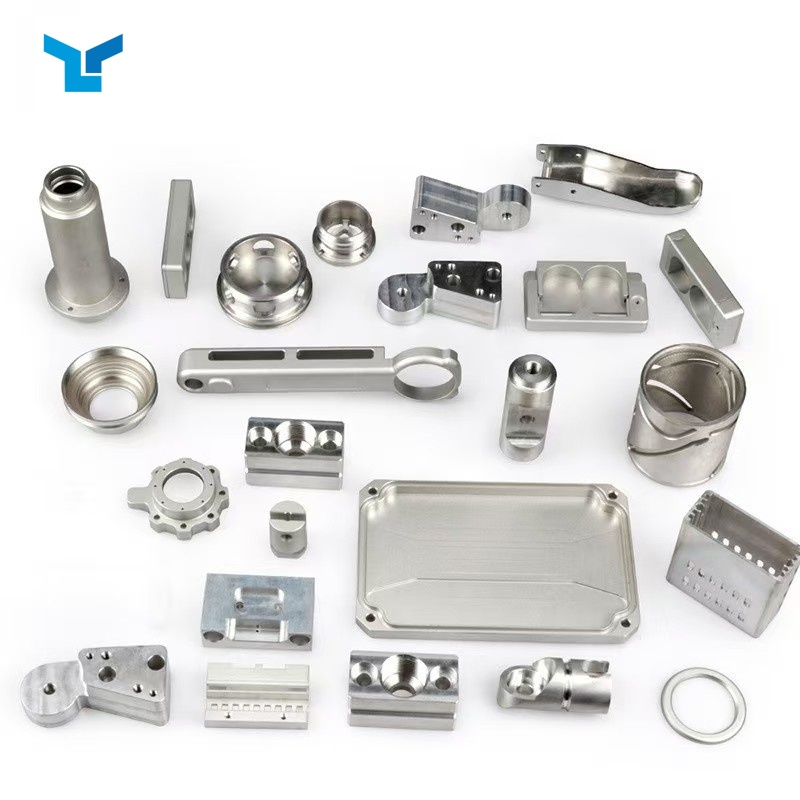
Delivering a flawless finish requires strict adherence to a multi-stage chemical sequence. Skipping or rushing any of these five steps guarantees a defective batch.
The process begins by immersing the metal part in a heavy-duty, heated alkaline solution. This bath strips away industrial contaminants, shop dirt, and grease.
Operators must verify cleanliness before proceeding. The part must pass a strict water break test. Water should sheet perfectly across the metal surface. Any residual cutting fluids or shop oils will block the chemical conversion. This contamination leads directly to a spotty, rejected finish. We recommend frequent bath titration to maintain cleaning efficacy.
The next step involves removing the alkaline cleaner entirely. Operators submerge the parts in overflowing cold tap water.
Rinsing sounds simple, but it carries high risks. Cross-contamination between tanks can quickly degrade the subsequent blackening bath chemistry. You must ensure your vendor uses active water overflow systems. Stagnant rinse tanks trap alkaline residue. This trapped residue eventually ruins the conversion process and creates aesthetic blotches.
Sometimes, metals require an acidic dip. This step removes existing rust or tough heat-treat scale from the substrate.
You must handle pickling carefully. For freshly milled outputs from custom part machining, operators often bypass this step entirely. If they cannot bypass it, they minimize the exposure time. Prolonged acid exposure causes microscopic surface pitting. Pitting destroys the smooth, aesthetic finish of a newly milled component.
This is the core transformation stage. Operators submerge the parts in a highly caustic bath. The solution contains sodium hydroxide, nitrates, and nitrites. It typically operates at a rolling boil between 285°F and 295°F for carbon steel.
The chemical environment forces the iron on the metal surface to react. It rapidly forms a black iron oxide compound known as magnetite.
Bath temperature and boiling point act as the most critical variables. The heavy concentration of caustic salts elevates the boiling point of the water. As water evaporates, the boiling point climbs even higher. Operators must carefully trickle water back into the boiling caustic solution. Failure to control this balance leads to catastrophic bath failure and ruined parts.
The final step locks in the protection. Operators apply a water-displacing oil, wax, or clear lacquer to the hot components.
The newly formed magnetite layer is highly porous. It acts like a microscopic sponge. This porous structure absorbs the sealant deeply into the surface. The sealant is the sole mechanism providing actual corrosion protection. It also creates the deep, rich black aesthetic expected from the process.
You must understand the technical differences between hot and cold oxidation techniques. They are not interchangeable. The chart below outlines the key differences between the two methods.
| Process Type | Chemical Mechanism | Durability & Wear | Ideal Use Case |
|---|---|---|---|
| Hot Black Oxide | True magnetite conversion at high heat | Highly abrasion-resistant | Military, aerospace, moving mechanical parts |
| Cold Blackening | Copper selenium surface deposition | Prone to scratching and rub-off | Rapid prototyping, shop touch-ups |
This represents a true chemical conversion occurring at high heat. It officially meets stringent MIL-DTL-13924 specifications. Military and aerospace sectors require this specific standard for compliance.
The resulting magnetite layer is highly abrasion-resistant. It bonds on a molecular level. You cannot rub it off easily under normal handling. However, the process requires specialized, highly hazardous chemical handling. Boiling caustic baths pose severe safety risks to untrained operators. You must verify your finishing partner maintains proper safety and ventilation protocols.
Cold systems operate entirely at room temperature. They do not create true magnetite. Instead, the bath deposits a softer copper selenium compound onto the steel surface.
The resulting finish is quite fragile. It remains highly prone to scratching and rub-off. It offers significantly lower functional value for mechanical parts. You should reserve cold processes for specific niches. They work well for rapid prototyping or architectural hardware. Many small shops use them where safety or ventilation constraints prevent hot bath usage.
Auditing a custom CNC parts manufacturer who offers finishing services requires a sharp eye. You must know exactly what visual cues indicate a failed process.
Red Rust or Brown Tones: If parts emerge looking brown or rusty, the process failed. This typically indicates the blackening bath temperature was too low. It can also mean the chemical salts were severely depleted.
Smutting: You might notice a powdery, black residue rubbing off on your hands. We call this smutting. It usually stems from a bath temperature that ran too high. Improper colloidal suspension in the bath can also cause this defect.
White Salts (Bleed-out): Sometimes white crusty deposits appear days after finishing. This occurs primarily in porous metals or blind holes. It happens if the operator skips the neutralizing rinse or fails to flush out trapped caustic salts.
Best Practice: Always require your vendor to perform alternating hot and cold rinses for parts with blind holes. Thermal cycling forces trapped caustic salts out of the cavities before they dry.
Quality goes beyond visual appearance. You must ensure the vendor’s sealing oils meet strict regulatory guidelines. Verify their after-finishes are fully RoHS compliant. This is absolutely critical if you manufacture products for the European market. Non-compliant finishes will trigger costly import rejections and regulatory fines.
Supply chain consolidation simplifies quality control. Moving parts between multiple vendors introduces severe logistical risks. It increases lead times, transit costs, and accountability gaps.
You gain a massive logistical advantage by utilizing a single supplier. Look for a partner capable of handling complex milling, EDM work, and certified finishing under one roof. Single-source accountability guarantees fewer rejected batches. When a single facility manages both the machining and the coating, they cannot blame a third-party vendor for tolerance issues.
Proper documentation prevents expensive miscommunications. You must properly specify the finish on your engineering drawings. Do not just write "Blacken part." This leaves too much room for vendor misinterpretation. Instead, use formal military or industry standards. A proper callout looks like this: "Black Oxide per MIL-DTL-13924, Class 1, with supplementary oil treatment."
Always validate a new vendor before committing to high-volume production. Here are the recommended next steps when qualifying a finishing partner:
Request a formal first-article inspection (FAI) to verify dimensions remain unaltered.
Ask the vendor to provide formal salt-spray testing data.
Verify the testing data matches the specific oil sealant they plan to use on your parts.
This data proves their process actually prevents corrosion in real-world environments.
The chemical conversion process offers unmatched strategic value for precision engineering. It delivers deep aesthetic appeal while maintaining perfect dimensional stability. By utilizing this finish, you ensure your high-tolerance parts assemble flawlessly every time.
Keep in mind that the underlying magnetite provides almost zero rust prevention on its own. The finish is only as good as its initial surface preparation and its final oil seal. You must audit your vendors strictly to prevent bleed-out and smutting.
Review your current part drawings today. Contact your engineering team to discuss your specific finishing requirements. Together, you can determine if a conversion finish, standard plating, or anodizing represents the most cost-effective path for your next production run.
A: No. It is a surface conversion process. Dimensional changes are typically less than 0.00001 inches, making it ideal for precision parts.
A: Black oxide offers mild corrosion resistance intended for indoor environments or internal assemblies. It relies entirely on the secondary oil/wax seal. For harsh outdoor or marine environments, zinc plating or specialized coatings are required.
A: Standard black oxide is for carbon steel. Stainless steel, copper, and brass require different, specialized blackening bath chemistries (e.g., MIL-DTL-13924 Class 4 for stainless). Aluminum cannot be black oxided; it must be anodized.
A: This is known as "smutting." It occurs when the finishing vendor operates the bath at an incorrect temperature, or fails to properly clean the part prior to the chemical conversion. It can also indicate a cheap "cold blackening" process was used instead of true hot black oxide.


