
English ![]()

No. 7, Tianyang 6th Road, Dongfang Community, Songgang Street, Bao'an District, Shenzhen, Guangdong, China(518100)


| Quantity: | |
|---|---|
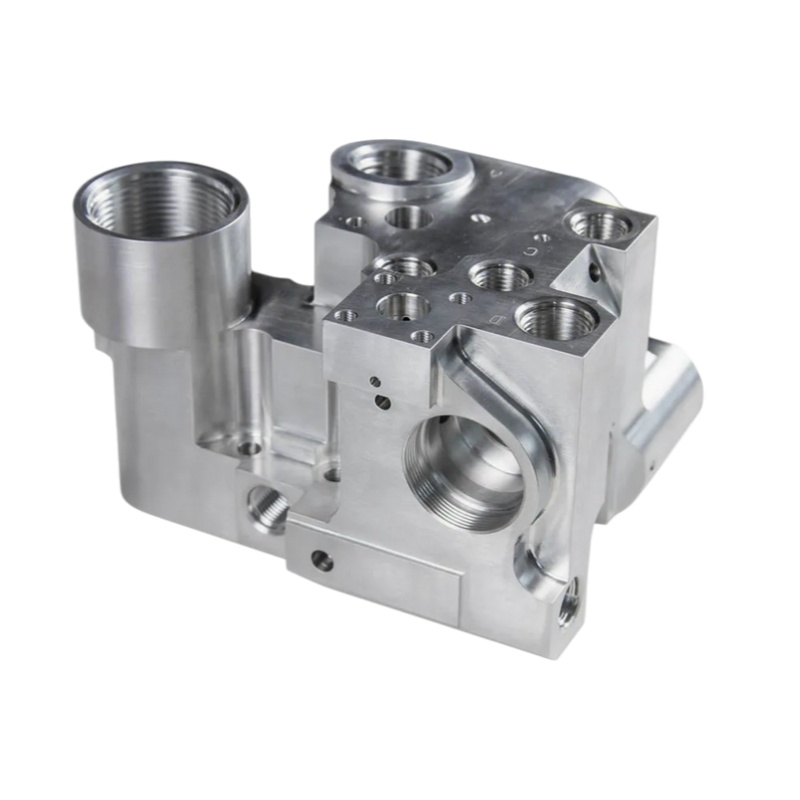
5-axis CNC machining has revolutionized medical device manufacturing by enabling the production of complex, high-precision components with unmatched accuracy. This advanced manufacturing technology plays a pivotal role in creating surgical instruments, orthopedic implants, and diagnostic equipment that meet stringent medical standards. With its ability to machine intricate geometries in a single setup, 5-axis CNC technology ensures superior quality while significantly reducing production time—a critical advantage in the fast-evolving medical field where precision can directly impact patient outcomes.
Key Medical Applications
Orthopedic Implants
Hip/knee joint replacements with anatomical contours
Spinal fusion cages with porous structures
Trauma fixation plates with complex geometries
Surgical Instruments
Minimally invasive surgical tools
Endoscopic components
Robotic surgery attachments
Dental Devices
Custom dental implants
Orthodontic appliance components
Crown/bridge abutments
Diagnostic Equipment
MRI coil components
Ultrasound transducer parts
CT scanner precision elements
Prosthetics
Custom prosthetic sockets
Articulating joint mechanisms
Lightweight structural components
Technical Advantages
Complex Geometry Capability
Machines undercuts and deep cavities without repositioning
Creates organic, patient-specific shapes
Exceptional Precision (±0.005mm)
Achieves medical-grade surface finishes (Ra 0.1-0.4μm)
Maintains tight tolerances for implant fitment
Material Versatility
Processes titanium (Ti6Al4V), cobalt-chrome, PEEK
Machines stainless steel (316LVM) for surgical tools
Handles ceramic composites for dental applications
Single-Setup Efficiency
Reduces production time by 60-70%
Eliminates cumulative errors from multiple setups
Surface Quality
Produces ready-to-use medical surfaces
Minimizes post-processing requirements
Industry-Specific Benefits
Improved Patient Outcomes: Precise implant fit reduces recovery time
Customization: Enables patient-specific device production
Sterility: Creates seamless surfaces that resist bacterial growth
Durability: Optimized material structure enhances device lifespan
Emerging Applications
Micro-Medical Devices
Components for robotic-assisted surgery
Miniature implants for ophthalmic applications
Bio-Integrated Devices
Bone ingrowth surface textures
Drug-eluting implant structures
Smart Medical Tools
Sensor-embedded surgical instruments
IoT-enabled diagnostic components
Material Innovations
Bioabsorbable Alloys: Magnesium-based implants
Nanocomposites: Antibacterial surface materials
Shape-Memory Alloys: Self-adjusting orthopedic devices
Case Examples
Titanium Spinal Cage
72-hour continuous machining
0.01mm interlocking tolerance
Porous structure for bone integration
Arthroscopic Shaver
Complex internal channels
Mirror-finish cutting surfaces
Single-piece construction
Future Trends
Digital Integration
Direct CAD-to-part production
AI-driven machining optimization
Hybrid Manufacturing
Combining additive and subtractive processes
In-situ quality verification
Nanoscale Machining
Cellular-level surface textures
Molecular-scale cutting techniques
5-axis CNC machining has become indispensable in medical device manufacturing, offering unparalleled capabilities to produce life-changing healthcare solutions. From custom orthopedic implants to precision surgical tools, this technology enables manufacturers to meet the industry's most demanding requirements while driving innovation in patient care. As medical technology advances toward personalized solutions and minimally invasive treatments, 5-axis machining will continue to play a vital role in developing the next generation of medical devices. Its unique combination of precision, flexibility, and efficiency makes it the manufacturing method of choice for cutting-edge medical applications where quality truly matters.

5-axis CNC machining has revolutionized medical device manufacturing by enabling the production of complex, high-precision components with unmatched accuracy. This advanced manufacturing technology plays a pivotal role in creating surgical instruments, orthopedic implants, and diagnostic equipment that meet stringent medical standards. With its ability to machine intricate geometries in a single setup, 5-axis CNC technology ensures superior quality while significantly reducing production time—a critical advantage in the fast-evolving medical field where precision can directly impact patient outcomes.
Key Medical Applications
Orthopedic Implants
Hip/knee joint replacements with anatomical contours
Spinal fusion cages with porous structures
Trauma fixation plates with complex geometries
Surgical Instruments
Minimally invasive surgical tools
Endoscopic components
Robotic surgery attachments
Dental Devices
Custom dental implants
Orthodontic appliance components
Crown/bridge abutments
Diagnostic Equipment
MRI coil components
Ultrasound transducer parts
CT scanner precision elements
Prosthetics
Custom prosthetic sockets
Articulating joint mechanisms
Lightweight structural components
Technical Advantages
Complex Geometry Capability
Machines undercuts and deep cavities without repositioning
Creates organic, patient-specific shapes
Exceptional Precision (±0.005mm)
Achieves medical-grade surface finishes (Ra 0.1-0.4μm)
Maintains tight tolerances for implant fitment
Material Versatility
Processes titanium (Ti6Al4V), cobalt-chrome, PEEK
Machines stainless steel (316LVM) for surgical tools
Handles ceramic composites for dental applications
Single-Setup Efficiency
Reduces production time by 60-70%
Eliminates cumulative errors from multiple setups
Surface Quality
Produces ready-to-use medical surfaces
Minimizes post-processing requirements
Industry-Specific Benefits
Improved Patient Outcomes: Precise implant fit reduces recovery time
Customization: Enables patient-specific device production
Sterility: Creates seamless surfaces that resist bacterial growth
Durability: Optimized material structure enhances device lifespan
Emerging Applications
Micro-Medical Devices
Components for robotic-assisted surgery
Miniature implants for ophthalmic applications
Bio-Integrated Devices
Bone ingrowth surface textures
Drug-eluting implant structures
Smart Medical Tools
Sensor-embedded surgical instruments
IoT-enabled diagnostic components
Material Innovations
Bioabsorbable Alloys: Magnesium-based implants
Nanocomposites: Antibacterial surface materials
Shape-Memory Alloys: Self-adjusting orthopedic devices
Case Examples
Titanium Spinal Cage
72-hour continuous machining
0.01mm interlocking tolerance
Porous structure for bone integration
Arthroscopic Shaver
Complex internal channels
Mirror-finish cutting surfaces
Single-piece construction
Future Trends
Digital Integration
Direct CAD-to-part production
AI-driven machining optimization
Hybrid Manufacturing
Combining additive and subtractive processes
In-situ quality verification
Nanoscale Machining
Cellular-level surface textures
Molecular-scale cutting techniques
5-axis CNC machining has become indispensable in medical device manufacturing, offering unparalleled capabilities to produce life-changing healthcare solutions. From custom orthopedic implants to precision surgical tools, this technology enables manufacturers to meet the industry's most demanding requirements while driving innovation in patient care. As medical technology advances toward personalized solutions and minimally invasive treatments, 5-axis machining will continue to play a vital role in developing the next generation of medical devices. Its unique combination of precision, flexibility, and efficiency makes it the manufacturing method of choice for cutting-edge medical applications where quality truly matters.


