English ![]()

No. 7, Tianyang 6th Road, Dongfang Community, Songgang Street, Bao'an District, Shenzhen, Guangdong, China(518100)
Views: 152 Author: Site Editor Publish Time: 2026-08-21 Origin: Site
Aerospace CNC machining brings clear benefits. Think about cost: smart material choices and less waste save 15-30% overall. Aluminum saves 70% compared to titanium for parts that are not critical. Production speed improves too. CNC machines run all day and night, cutting down on manual work and mistakes. CNC machining for aerospace needs this kind of efficiency.
CNC machining for aerospace parts, like CNC Milling 7075 Aluminum Aerospace Parts or 5-Axis Machining Titanium Aerospace Blisks, changes how aerospace parts are made. Aerospace Parts Manufacturing Solutions from partners like Zhongyi Precision Technology Co., Ltd. support these uses. Let's see how these benefits turn into real gains for your projects.
CNC machining gives very high precision, with tolerances as tight as ±0.0005mm, which helps keep flights safe and parts consistent.
Complex shapes like turbine blades are now possible, which boosts performance and reduces wasted material.
Smart material choices (aluminum, titanium, Inconel) balance strength, weight, and cost for each part.
Automation and 5-axis machining cut down on mistakes and setup time, saving 15-30% on total costs.
Aerospace CNC machining offers benefits that directly affect flight safety, production speed, and your profits. When you pick CNC manufacturing for important parts, you gain control over every step of production. The benefits of CNC machining go far beyond just making parts. You get consistency, less waste, and shapes that old methods cannot create. Knowing these benefits helps you choose wisely for your aerospace projects.
Precision manufacturing is the base of aerospace part production. CNC machines follow digital instructions and make every move with exact accuracy. Zhongyi Precision Technology Co., Ltd. reaches tolerances up to ±0.0005mm with 5-axis CNC systems. This level of accuracy ensures every part matches its digital twin perfectly.
The digital control system follows pre-programmed instructions with steady precision. This automation lowers human error and allows nonstop operation with little oversight. You can run production all day and night without losing quality. Multiple operations in one setup improve consistency and efficiency. Each part comes out as a physical match of its digital twin, with tight tolerances and little variation between batches.
For structural parts, tolerances often reach ±0.005 inches. Critical engine parts need even stricter standards at ±0.0005 inches. Keeping these tight tolerances requires attention to temperature control, tool condition, and real-time checks. Errors cost you scrap, delays, and safety risks. CNC machining for aerospace removes these worries through repeatable, verifiable processes.
CNC machining aerospace parts lets you create complex shapes that manual methods cannot achieve. Internal cooling channels in turbine blades, honeycomb structures for lightweight strength, and intricate engine housings all become possible. These designs boost performance while cutting weight and material use.
CNC machining, often combined with deep hole drilling, enables accurate formation of these narrow, high-aspect-ratio channels. This precision improves thermal management and extends the operational life of turbine blades.
Automation drives major cost savings in aerospace CNC machining. Robotic systems handle repetitive tasks like material handling and inspection. This frees skilled workers for complex operations. Automated machining centers reduce the need for manual work, lowering human error and improving consistency. You can operate 24/7, increasing output while cutting labor costs.
Automation also optimizes cutting paths and material use. Each sheet or block of material gets used efficiently, leading to significant waste reduction. Despite high initial investment, long-term savings are substantial. Reduced labor needs, minimized energy use, and decreased material waste result in a lower cost per unit. The integration of 3D printing with CNC processes further reduces waste by creating complex geometries additively before precision finishing.
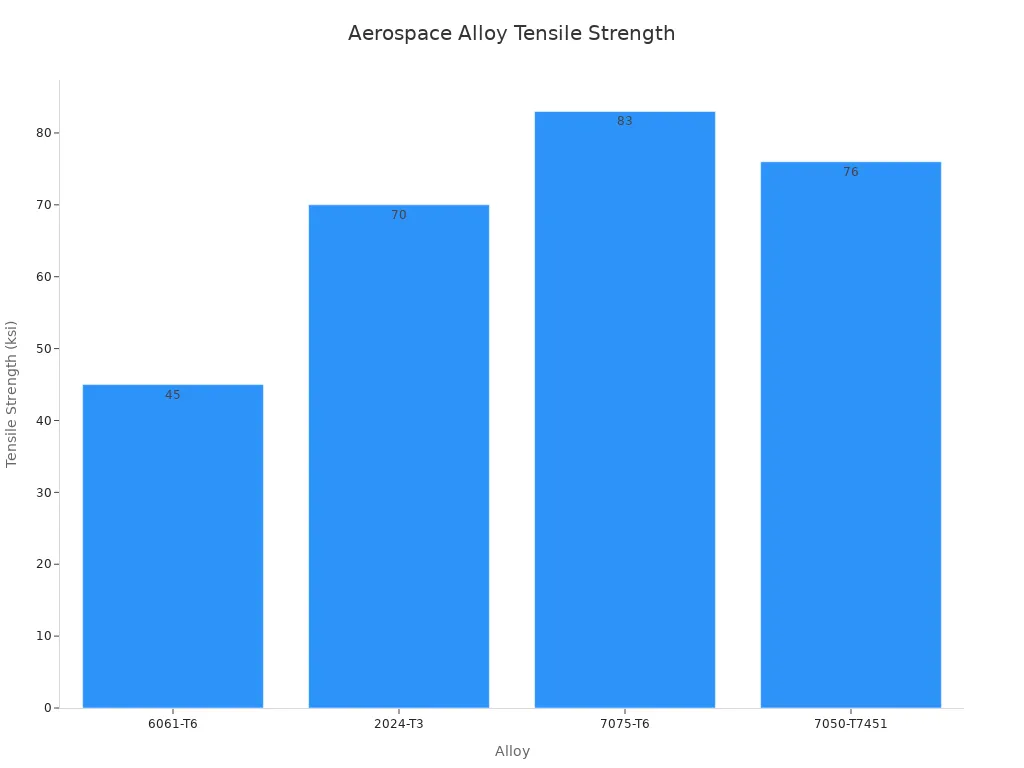
Material selection plays a key role in cost efficiency. Different alloys offer varying strength and cost profiles:
Aluminum alloys like 6061-T6 provide cost-effective solutions for brackets and housings. Higher-strength options such as 7075-T6 handle wing ribs and load-bearing frames. Titanium offers superior strength-to-weight ratios for demanding applications. Inconel withstands extreme temperatures for engine components. Choosing the right material for each part maximizes performance while controlling costs. The advantages of CNC for aerospace become clear when you consider these combined benefits of precision, complexity, and efficiency. High-precision components produced through CNC machining meet the demanding standards of modern aerospace engineering.
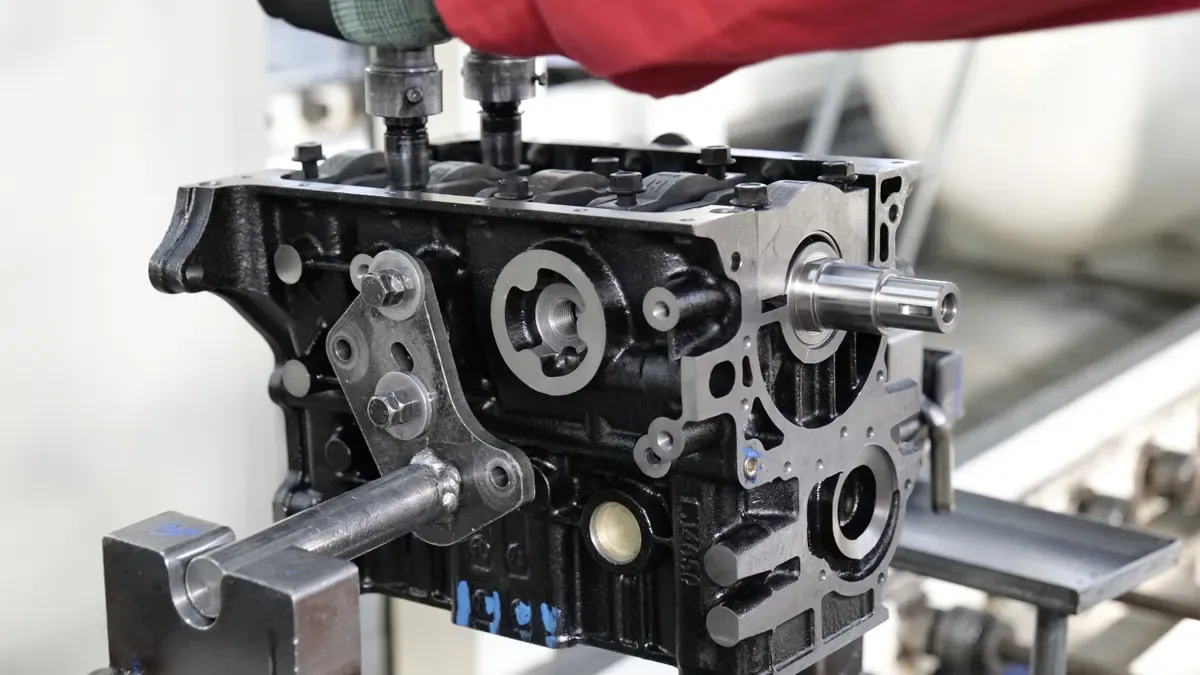
CNC machining is used in almost every important system on an aircraft or spacecraft. When you board a plane or watch a satellite launch, machined parts work behind the scenes to keep things safe and working well. Knowing where these parts are used helps you see why CNC machining is the usual way to make parts in the aerospace industry.
Aircraft parts need materials that are both strong and light. Aluminum alloys like 7075 and 6061 are used in many airframes because they are strong for their weight and easy to machine. You will find 7075 in parts that carry heavy loads, such as wing ribs and fuselage frames. These parts have pocketed shapes that remove extra material but stay stiff. CNC milling makes these complex shapes from solid blocks of metal with great accuracy.
Titanium alloys are used for different jobs. Engine parts and landing gear use titanium because it is strong, light, and resists heat and rust. Think about the extreme conditions inside a jet engine. You can see why picking the right material is important. Turbine blades spin very fast while hot gases hit them. They must stay perfectly balanced to avoid a serious failure. Even a tiny difference in weight or crystal structure can cause problems. 5-axis machining creates the curved shapes and internal cooling channels these blades need. It reaches tolerances that manual methods cannot achieve.
Nickel-based superalloys like Inconel are used in the hottest parts of the engine. Turbine blades and combustion chambers keep their strength at temperatures that would weaken other metals. Machining Inconel needs special tools and careful cutting methods because the material hardens quickly when worked. The table below shows common aerospace parts and why CNC machining is a good fit for them:
| Component | Material | Why CNC Machining is Used |
Fuselage Frames | Aluminum alloys (e.g., 7075) | CNC milling provides lightweight strength to meet outer shell rigors. |
Turbine Blades | Nickel-based superalloys (e.g., Inconel 718) | 5-axis machining produces complex shapes for high-temperature propulsion. |
Landing Gear Struts | Stainless steel (e.g., 17-4 PH) | CNC turning and grinding achieve tight tolerances to support takeoff/landing loads. |
Wing Ribs | Aluminum alloys | CNC milling creates complex geometries for aerodynamic stability. |
Compressor Housings | Titanium alloys (Ti-6Al-4V) | 5-axis method enables high-performance propulsion manufacturing. |
Spacecraft parts have even stricter requirements. Rocket engine housings have hollow cavities that need special machining of large parts. Satellite housings need repeatable accuracy for custom enclosures that hold sensitive sensors and electronics. Aluminum alloys like 6061 and 7075 allow fine-tuning of cuts and shapes for light, high-performance parts. Frames and housings for spacecraft systems need one-piece construction for strength.
Besides the airframe and engine, CNC machining makes the electronic and support systems that keep flights safe. Avionics housings protect sensitive flight-control computers, radar systems, and power converters. These enclosures need tight dimensional control for board alignment, electromagnetic shielding, and vibration resistance. CNC machining gives the precision these protective cases require.
Aircraft instrument panels, doublers, angles, brackets, and other flat parts are made with CNC machining. Each part must fit perfectly in its assembly. Housing assemblies for sensitive avionics need protective enclosures that shield electronics from electromagnetic interference and physical damage. Zhongyi Precision Technology Co., Ltd. makes these high-precision parts, ensuring reliability in important systems.
Ground support equipment also uses machined parts. Test fixtures, maintenance tools, and inspection gauges need accurate dimensions to work properly. When you think about all the aerospace applications, you see CNC machining everywhere. The aerospace applications of this technology touch every part of flight, from takeoff to landing and beyond.
Aluminum is the main material used in aerospace CNC machining. It offers a good balance of weight, strength, and cost. Alloys like 7075 and 6061 are strong but very light. Aluminum resists rust naturally because a thin oxide layer forms when it meets air. This makes it great for outside parts of aircraft like the fuselage and wings. CNC machining keeps this protection by not adding stress or weakness to the metal. Parts can handle high altitudes and harsh conditions for a long time.
Titanium is stronger for its weight than most metals. The aerospace industry uses more than half of all titanium made worldwide. Ti-6Al-4V (Grade 5) is the most common type because it balances strength, toughness, and resistance to fatigue. You will find titanium in landing gear, engine compressor parts, and structural supports in the airframe. It lasts longer and needs less upkeep.
Inconel can handle extreme heat that would damage other metals. These alloys keep their strength at temperatures above 1,200°F (650°C). Inconel 625 holds 13.3 ksi of load at 2,000°F. That is why it is used for turbine discs and combustion chambers. The table below compares these common aerospace CNC machining materials:
| Property | Aluminum | Titanium | Inconel |
| Weight | Lightest | Moderate | Heaviest |
Max Service Temp | ~300°F | ~1,100°F | ~1,800°F |
Relative Cost | Lowest | Moderate | Highest |
Primary Use | Airframes | Landing gear | Engine hot sections |
CNC milling creates complex shapes like housings and structural parts. Multi-axis milling can reach parts from many angles in one setup. This lowers mistakes and keeps sizes consistent. For round parts like shafts and bushings, precision turning centers give better roundness and smoother surfaces.
5-axis machining changes how complex aerospace parts are made. Regular CNC milling holds about ±0.05 mm, but 5-axis often hits ±0.01–0.02 mm. In good conditions, it can reach ±0.005 mm. This level of precision is vital for aerospace parts that need extreme accuracy. Doing everything in one setup avoids errors from moving parts between machines. Setup time drops a lot too. Real production data shows a 25% gain in process accuracy, with setups cut from 5+ down to 2.
Zhongyi Precision Technology Co., Ltd. pairs these processes with high-speed spindles and thermal compensation systems. This CNC manufacturing method works well on tough materials like titanium and Inconel. Short, stiff cutting tools reduce shaking and bending. You get smoother surfaces on critical aerospace shapes. Matching the cutting tool material, coatings, and shape to the workpiece prevents tool wear and part damage.
When you make parts for flight, quality systems matter just as much as the machining itself. Aerospace buyers want proof that every part meets strict standards. Certifications like AS9100 and ITAR compliance give you that confidence. They show that a machine shop follows careful steps for traceability, risk management, and ongoing improvement.
AS9100D is the worldwide quality standard for aviation, space, and defense. This certification shows that a machine shop follows strict steps for quality control, traceability, risk management, and ongoing improvement. It gives aerospace buyers trust in the consistency and reliability of machined parts.
AS9100D is the worldwide quality standard for aviation, space, and defense. It shows that a machine shop follows strict steps for quality control, traceability, risk management, and ongoing improvement—giving aerospace buyers trust in the consistency and reliability of machined parts.
ITAR compliance protects sensitive technical data. A machine shop must register with the DDTC and set up security steps. You need safe handling of CAD files, inspection reports, and controlled specs. Access control limits technical data to approved staff only. Suppliers who do not comply can cause delays and force supplier changes. The penalties for breaking the rules are severe:
| Violation Type | Penalty |
| Civil Penalties | Up to $1,271,078 per violation |
Criminal Fines | Up to $1 million |
Imprisonment | Up to 20 years for willful violations |
Example Settlement | RTX Corporation paid $200 million in 2024 for unauthorized data exports |
Careful inspection steps ensure every part meets specs. Zhongyi Precision Technology Co., Ltd. holds ISO 9001 certification and uses Coordinate Measuring Machines (CMM) for full checks. This cnc machining quality control method catches errors before parts reach your assembly line.
A CMM measures dimensions with micron-level accuracy, lowers human measurement errors, and checks complex 3D shapes. The computer system compares measurements with CAD data and creates inspection reports. This ensures every key dimension meets design needs before shipment.
For aerospace parts, AS9100 Rev D requires formal production process checks via AS9102 First Article Inspection. This process needs three forms: Form 1 for part number tracking, Form 2 for material records, and Form 3 for ballooned drawing cross-reference with actual measured results. You trigger FAI when adding new parts, changing designs, switching manufacturing sources, or after a production break longer than two years.
Common inspection methods include visual checks for surface flaws, dimensional tools like calipers and micrometers for tight tolerances, and Go/No-Go gauges for quick pass/fail checks on threaded holes. Surface profilometers measure roughness values, while hardness testers verify heat treatment per ASTM standards. This mix of cnc machining quality control measures delivers the accuracy and precision aerospace demands.
CNC manufacturing stays vital for aerospace. You get precision, complex shapes, and cost savings. AS9100 and ITAR compliance make sure your parts meet strict industry rules. CNC machining in aerospace works from early prototypes to full production. Working with a trusted partner like Zhongyi Precision Technology Co., Ltd. gives you an edge over competitors. The benefits of CNC for aerospace are obvious.
Aerospace CNC machining needs this level of dependability. As technology improves, this method will keep driving new ideas. You can trust these CNC machining benefits for your next project. Whether you need aerospace parts for aircraft or spacecraft, it delivers steady results.
5-axis CNC systems can reach tolerances up to ±0.005mm for aerospace parts. This accuracy makes sure every part matches its digital design. You get the same results every time you run production.
Aluminum, titanium, and Inconel are often used. Aluminum is strong but light. Titanium gives a better strength-to-weight ratio. Inconel can handle very high heat in engine parts.
AS9100 is the global quality standard for aviation and defense. ITAR compliance keeps sensitive technical data safe. These certifications show your parts meet strict industry rules.
5-axis CNC machining makes complex aerospace shapes in one setup. This cuts down on mistakes from moving parts between machines. You get tighter tolerances and smoother surfaces on important parts.